Now that you’ve set some of your investment goals, you may wonder what are the next steps before you embark on your long-term investing journey. Read more
Mapping out the investment options to achieve your goals could be likened to choosing the mode of transport as you travel. You can choose the optimal portfolio mix based on your investment objectives and time horizon, just like you would decide whether to take a bus or a train to reach your destination.
In this article, we share the remaining three frequently asked questions which could help you align an investing plan with your investment objectives and risk appetite. This could help you stay invested based on your needs even as market conditions change1.
1. What are the factors to consider when investing?
- There are many investing options, but it’s important to make choices that are aligned with your investment objectives and risk appetite. For goals with longer time frames, create an investment strategy that allows you to take advantage of the longer investment horizon. Additionally, consider having some liquid short-term investments and cash to help you cover emergencies and upcoming large expenses so that you won’t have to sell your investments during down markets.
- Markets are unpredictable and no single asset class can be an all-time winner. A well-diversified portfolio can help manage risk while seeking consistent return opportunities.
- Based on the performance of various assets over the past 15 years, a 50/50 equity & bond portfolio could attain an annualised return of 6.1% while keeping annualised volatility lower than a pure equity portfolio2.
- Investing newbies can consider monthly fund investment plans as they build their capital. Some investment plans require just a minimum investment of HK$1,000 per month3 and you can invest in a diversified pool of assets, based on your objectives and risk appetite.
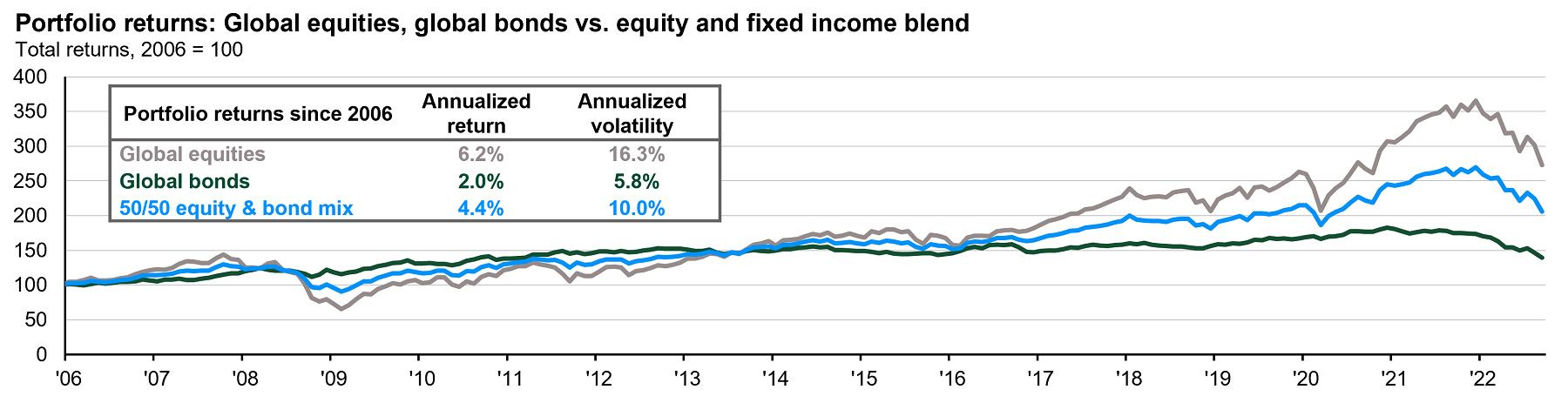
2. Source: Bloomberg Finance L.P., FactSet, MSCI, J.P. Morgan Asset Management. Global equities represented by MSCI AC World Index; global bonds represented by Bloomberg Barclays Aggregate Global Bond Index; 50/50 equity & bond mix represented by a 50% equity (MSCI AC World Index) and 50% bond (Bloomberg Barclays Aggregate Global Bond Index) portfolio. Diversification does not guarantee investment returns and does not eliminate the risk of loss. Indices do not include fees or operating expenses and are not available for actual investment. Past performance is not a reliable indicator of current and future results. Data reflect most recently available as of 30.06.2021.
2. If I can’t follow the markets closely, what should I do?
- A dollar cost averaging (DCA) strategy could be an investment option1. You can kickstart your investment plan by investing a fixed amount of money regularly, and this in the long run, can help reduce the impact of short-term market volatility on the overall investment.
- For a DCA strategy, money is invested in equal amounts at regular intervals, regardless of the asset’s price. You are free from worrying about timing the market, and would be able to better manage the risk of “buying high, selling low”.
- Remember that market volatility is normal. Markets move in cycles and through peaks and troughs - it is almost unheard of for performance to only ever move upward. However, when popular signals start to indicate difficult times ahead, investors can still remain invested as they considered appropriate. Be aware of the volatility you can handle, troubled times aren’t necessarily a sign to sell everything.