

Chief Global Strategist
Alan Greenspan, who served as Fed Chairman for almost 20 years, died last month at the age of 100. He was a talented and faithful public servant who guided U.S. monetary policy through the stock market crash of 1987, the boom years of the 1990s and the dot-com bubble. He was thoughtful and witty in his public comments. However, he seemed to regard a lack of clarity as almost a virtue. He inherited a Fed that had always been reticent to communicate and he largely maintained that cloak of secrecy.
At one point, starved of information, CNBC started a "briefcase indicator", in which Federal Open Market Committee (FOMC) decisions would be predicted by the size of Greenspan’s briefcase as he entered the meeting. A bulging bag suggested Greenspan would argue for a change in policy; a slimmer one indicated no change. However, as Greenspan later noted in his autobiography1, the size of the bag largely depended on whether he had packed a lunch for the day…considerably lessening its value as a predictor.
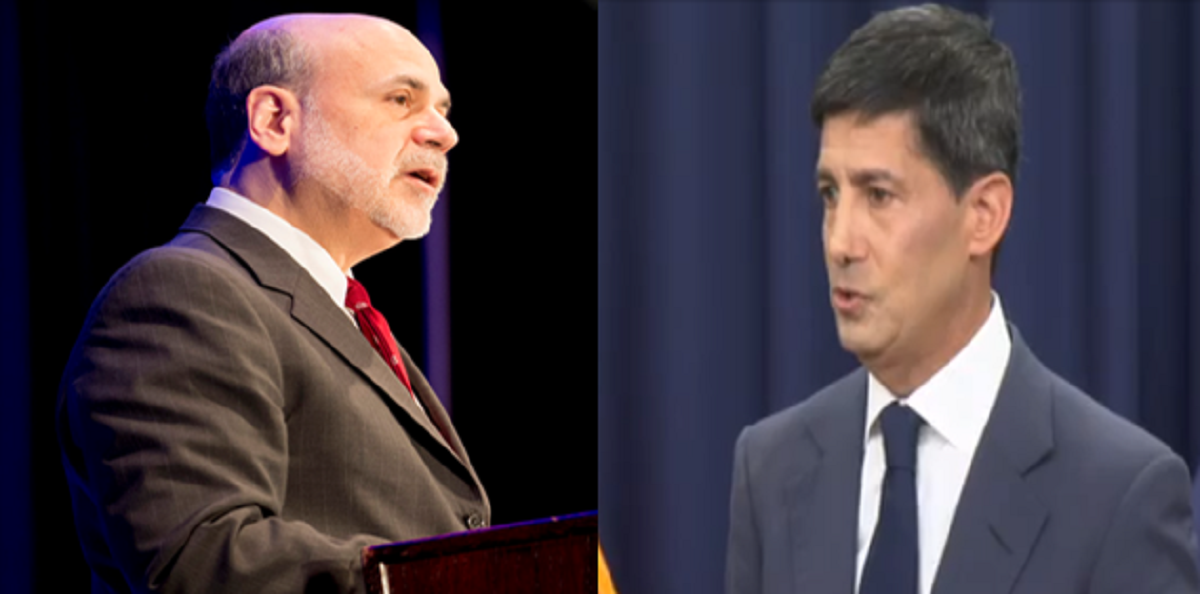
Ben Bernanke, his immediate successor, had great respect for Greenspan. In his statement on Greenspan’s passing, he noted that “…we are still learning from him, even if he is no longer with us.” However, Bernanke strongly believed that the Fed should be more transparent, and under his leadership, the Fed added a number of innovations to explain Fed views and actions, a trend that was extended under both Chair Yellen and Chair Powell.
Conversely, the new Fed Chairman, Kevin Warsh, has expressed the view that the Fed is now communicating too much. After chairing his first FOMC meeting, Warsh announced that he was setting up five task forces to review key aspects of Fed policy and one of those concerned communications. Last week, he revealed the membership of these task forces.
The task force approach is probably a wise one, not so much because it brings in outside expertise, as because it gives everyone on the FOMC and in the financial community in general, time to debate these issues. And there are important questions to be considered with regard to Fed communications.
So this seems like a good time to examine the evolution of Fed communications, the contrast between Bernanke's view and Warsh's, arguments over forward guidance, the summary of economic projections, the dot plot and other Fed communications, what the Fed should do about communications, what they likely will do and what this all could mean for markets and investors.
The Evolution of Fed Communications
For most of its history, since its founding in 1913, the Federal Reserve had provided the public with very little explicit information on its actions and the rationale behind them. Although the FOMC has met eight times a year since 1981, when Alan Greenspan became Fed Chairman in 1987, market participants still had to infer changes in the fed funds rate target from any change in purchases and sales of short-term securities by the open market desk of the New York Fed.
In February 1994, the FOMC decided to raise rates for the first time in five years and, to make certain that there was no ambiguity about their move, Greenspan issued a short statement under his name, announcing a decision "…to increase slightly the degree of pressure on reserve positions"2. For a period the Fed continued to release statements only after those FOMC meetings in which they actually changed policy. Over time these communications became clearer and, in 1999, announcements became standard practice for all FOMC meetings, whether there was a change in rates or not. In 2002, the statement was expanded to include a roll call of the voting members on actions taken.
In 2007, the Fed attached a quarterly summary of economic projections (SEP) by FOMC participants to the minutes of Fed meetings, released some weeks later, outlining median expectations on real economic growth, inflation and unemployment. Starting in 2011, these projections were released at the same time as the FOMC statement, greatly enhancing their usefulness and, in 2012, a "dot plot" was added, indicating where participants felt the federal funds rate should be at the end of each of the next few years and in the long run, subject to their economic forecasts.
Also in 2011, Ben Bernanke initiated the practice of holding a post-FOMC press conference after each meeting in which a summary of economic projections was released. This was expanded to holding press conferences after every meeting by Jerome Powell in 2019.
Finally, in the aftermath of the Great Financial Crisis, the Fed began to include so-called "forward guidance" in its FOMC statement, under the rationale that it could put further downward pressure on long-term interest rates by indicating that they had no intention of raising short-term rates anytime soon. While the messaging of forward guidance has changed over the years, it had generally persisted in the FOMC statement in one form or another until last month’s meeting.
Beyond all of this, while the FOMC has fairly detailed rules on communications, FOMC members have generally been free to opine on the economy and monetary policy in speeches, public appearances and media interviews, subject to a prohibition of commentary on policy in the ten days before and one day after an FOMC meeting.
The Contrast between Bernanke's and Warsh's Views
Much of this revolution in Fed communications came during Ben Bernanke's tumultuous term as Fed Chairman between 2006 and 2014 and he frequently advocated for greater Fed transparency. In a speech towards the end of his tenure, he outlined his philosophy as a belief that "…transparency in monetary policy enhances public understanding and confidence, promotes informed discussion of policy options, increases the accountability of monetary policymakers for reaching their mandated objectives, and ultimately makes policy more effective by tightening the linkage between monetary policy, financial conditions and the real economy."3
He also strongly advocated in favor of "forward guidance", noting that longer-term interest rates are closely linked to expectations of how short-term rates will evolve and that a central bank may be able to make policy more effective by working to shape those expectations.
Kevin Warsh, while lauding Ben Bernanke as a "wise and resolute Fed Chairman" in his confirmation hearings4, takes a very different view of Fed communications. This was clearly on display at his first post-FOMC press conference where he drew attention to a shorter, simpler statement, noted the removal of forward guidance from the statement and refrained from including his own views in the summary of economic projections, consistent, in his own words, with his "…long-held views on the SEP, at least as currently structured". He also directly argued against forward guidance in general, stating that, in his opinion, "…the financial markets work less efficiently when they ask the question: How will the Federal Reserve react to that incoming information?"
Finally, while repeating his intention not to prejudge the findings of his task force, he did indicate that he might prefer to hold press conferences only when the Fed actually had something to announce and expressed a view that market reactions to the Fed statement itself were more useful, unfiltered than for him, once the statement had been delivered, then further improvising upon it. In presenting his view of press conferences he noted that his old mentor, George Shultz, had a mantra that "Press conferences are useful. But when you have one, you want to make sure you have something to say."
What Should the Fed do?
Warsh’s perspective is clearly in sharp contrast to the path that Fed communications have been on for over 30 years, and changes are therefore quite likely. But before considering what the Fed will do about communications it's worth considering what they should do.
As a broad proposition, it is hard to argue with Bernanke's perspective that increased transparency should lead to greater economic efficiency. If financial markets have a better sense of how the Fed expects the economy to evolve and how they will adjust monetary policy to changes in those expectations, then one layer of uncertainty surrounding future short-term interest rates is removed. Less uncertainty about future rates should, all other things be equal, make lenders more willing to lend and borrowers more willing to borrow, enhancing the efficient flow of credit through the economy.
Transparency as a general proposition should also improve monetary policymaking. Fed governors and bank presidents who are forced, every three months, to provide projections on the evolution of economic variables and interest rates are more likely to study the matter carefully than if they could wing it at the meeting. In addition, if private commentators have the numbers, they can point out any potential inconsistency in the forecasts which, if considered with an open mind by the forecasters, can only enhance the quality of future forecasts. This is also the case if, even without outside criticism, the forecasters recognize, in hindsight, mistakes they have made.
Finally, in an information age, it is probably a good idea to disseminate relevant information as quickly as possible. If the FOMC makes decisions about future monetary policy and does not let the public know right away, there is some danger of some market participants finding out about these decisions and profiting from them through the misuse of inside information.
All of this being said, Chairman Warsh has some points on his side of the argument.
Warsh’s strongest ground is on the issue of written forward guidance. Part of the problem with written forward guidance is that it is not credible if is purported to be independent of incoming economic numbers. However, in a world where the Fed seems wedded to the idea of only gradually adjusting short-term interest rates, it is plainly counterproductive due to its impact on expectations. If, for example, the Fed announces that it is cutting interest rates today and that it intends to cut rates further, long-term interest rates may see an immediate decline. However, that won’t necessarily spur higher borrowing if, by that announcement, the Fed implies that it is worried about the economic outlook and that borrowers will be able to access lower rates later.
However, this is really a criticism of gradualism in implementing monetary policy rather than of forward guidance itself. While the forward guidance in Fed statements is ambiguous, the forward guidance in the Summary of Economic Projections is not and, provided these projections are not manipulated to be a tool of monetary policy itself, they probably enhance economic efficiency.
The same can be said for the interest-rate dot plot which has the great advantage of both projecting a path for short-term interest rates and illustrating the uncertainty around this path.
On the issue of press conferences, it may be tiresome for a Fed chair to rake over the coals of a statement. However, there will always be some ambiguity in a statement and a press conference can help clear this up. For example, the last FOMC statement ended with the simple line: "The Committee will deliver price stability". A reasonable observer might well ask how narrowly the Fed is defining price stability, how quickly they expect to attain it and what tradeoffs the Fed is willing to accept with regard to its employment mandate to achieve this.
Finally, Fed officials will always want to opine on the economy and monetary policy. Doing so and confronting challenges to their own thinking can only make them better central bankers.
What Will the Fed do?
So what will the Fed do on communications?
For most decisions, changes will likely have to first await the report of the communications task force which Warsh expects, like the other task forces, to complete its work by the end of the year. That being said, the opinions of the task force on this issue are unlikely to be decisive for two reasons.
First, the members of the communications task force appear to have different opinions on the issue of central bank communications. Mervyn King, Peter Fisher and Arminio Fraga are all seasoned and highly-respected former central bankers. However, King as governor of the Bank of England, championed transparency while Fisher, once back in the private sector, argued against forward guidance. Arminio Fraga, as head of the Central Bank of Brazil, will bring a third perspective, having had the difficult task of convincing markets of the bank’s commitment to low inflation in a country that had seen many bouts of the exact opposite. Given this, the task force may well have a difficult time coming up with a single set of recommendations.
Second, even if they do so, communications is likely an area where most, if not all, FOMC members will consider themselves just as well qualified as the task force. This stands in contrast to issues such as AI, productivity and inflation measurement where the FOMC is more likely to defer to outside expert opinion.
Assuming this is the case, what is the FOMC likely to decide?
On two issues, it may find it easy to acquiesce to Warsh’s stated opinion. The June FOMC statement ran to just 129 words compared to 282 in the statement from June 2025, which was the last time the FOMC had a unanimous decision to leave rates on hold. The FOMC is likely to continue this commitment to brevity.
Second, the FOMC may well be willing to move away permanently from forward guidance in the statement. This forward guidance had become somewhat tortured anyway, with, for example, commentators having to discern the difference in meaning between "any adjustments in the target range for the federal funds rate" and "additional adjustments to the target range for the federal funds rate".
However, most members of the FOMC may be reluctant to abandon the Summary of Economic Projections. They likely actually agree with the Bernanke view of the value of transparency and a concrete projection of economic variables and a resulting projection of a path for the federal funds rate would seem to support this objective. Moreover, creating forecasts forces them to be thoughtful and analytical in considering the economic outlook which they likely appreciate.
Consequently, the majority of the FOMC may well support only cosmetic changes to the SEP.
In the same vein, the majority of the FOMC may be reluctant to put any further restraints on their ability to comment on the outlook and monetary policy between meetings. It probably isn’t as much fun being a member of the FOMC if you can’t say what you are actually thinking.
Finally, on the issue of press conferences, while Warsh might like to hold them only, as Shultz had suggested, when he has something to say, this brings up a simple logistical issue. Even an impromptu press conference by the Fed would require some planning between the decision to hold it and gathering reporters at the Fed. Such planning could send confusing messages to markets and would increase the risk of trading on non-public information. FOMC participants will likely see this and recommend that a press conference still be held after each meeting even if it is more abbreviated than in the past.
In summary, then, while the Warsh Fed may well eliminate verbal forward guidance and shorten its written communications, it’s unlikely to move away from a trend to greater transparency that it embarked upon over 30 years ago. For investors, this should be welcome. While markets are as vulnerable as ever to uncertainty from a wide variety of political, geopolitical, environmental and technological shocks, there is little reason to expect greater uncertainty about what the Fed is thinking and how it might act.