JP Morgan Asset Management - Home
Financial Professional Login
Log in
  • My Collections
    View saved content and presentation slides
  • Logout
  • Products
    Overview

    Products

    • Mutual Funds
    • ETFs
    • SmartRetirement Funds
    • 529 Portfolios
    • Alternatives
    • Separately Managed Accounts
    • Money Market Funds
    • Commingled Funds
    • Featured Funds

    Asset Class Capabilities

    • Fixed Income
    • Equity
    • Multi-Asset Solutions
    • Alternatives
    • Global Liquidity
  • Investment Strategies
    Overview

    Tax Capabilities

    • Tax Active Solutions
    • Tax-Smart Platform
    • Tax Insights
    • Tax Information

    Investment Approach

    • ETF Investing
    • Model Portfolios
    • Separately Managed Accounts
    • Sustainable Investing
    • Commingled Pension Trust Funds

    Education Savings

    • 529 Plan Solutions
    • College Planning Essentials

    Defined Contribution

    • Retirement Plan Solutions
    • Target Date Strategies
    • Retirement Income
    • Startup and Micro 401(k) Plan Solutions
    • Small to Mid-market 401(k) Plan Solutions

    Annuities

    • Annuity Essentials
  • Insights
    Overview

    Market Insights

    • Market Insights Overview
    • Guide to the Markets
    • Quarterly Economic & Market Update
    • Guide to Alternatives
    • Market Updates
    • On the Minds of Investors
    • Principles for Successful Long-Term Investing
    • Weekly Market Recap

    Portfolio Insights

    • Portfolio Insights Overview
    • Asset Class Views
    • Taxes
    • Equity
    • Fixed Income
    • Multi-Asset Solutions
    • Alternatives
    • Long-Term Capital Market Assumptions
    • Strategic Investment Advisory Group

    Retirement Insights

    • Retirement Insights Overview
    • Guide to Retirement
    • Principles for a Successful Retirement
    • Retirement Hot Topics
    • Social Security and Medicare Hub

    ETF Insights

    • ETF Insights Overview
    • Guide to ETFs
    • Monthly Active ETF Monitor
  • Tools
    Overview

    Portfolio Construction

    • Portfolio Construction Tools Overview
    • Portfolio Analysis
    • Model Portfolios
    • Investment Comparison
    • Heatmap Analysis
    • Bond Ladder Illustrator

    Defined Contribution

    • Retirement Plan Tools & Resources Overview
    • Target Date Compass®
    • Heatmap Analysis
    • Core Menu Evaluator℠
    • Price Smart℠
  • Resources
    Overview
    • Account Service Forms
    • Tax Information
    • News & Fund Announcements
    • Insights App
    • Webcasts
    • Continuing Education Opportunities
    • Library
    • Market Response Center
    • Artificial Intelligence
    • Podcasts
  • About Us
    Overview
    • Diversity, Opportunity & Inclusion
    • Spectrum: Our Investment Platform
    • Media Resources
    • Our Leadership Team
    • Our Commitment to Research
  • Contact Us
  • Role
  • Country
DST Vision
Shareholder Login
  • My Collections
    View saved content and presentation slides
  • Logout
Financial Professional Login
Search
Menu
Search
You are about to leave the site Close
J.P. Morgan Asset Management’s website and/or mobile terms, privacy and security policies don't apply to the site or app you're about to visit. Please review its terms, privacy and security policies to see how they apply to you. J.P. Morgan Asset Management isn’t responsible for (and doesn't provide) any products, services or content at this third-party site or app, except for products and services that explicitly carry the J.P. Morgan Asset Management name.
CONTINUE Go Back

Exposure to maritime transportation can act as a geopolitical hedge since the earning power of vessels can improve when trade is disrupted.

The closure of shipping lanes through the Strait of Hormuz is a major supply chain disruption with numerous downstream impacts. One sector benefitting from the disruption, perhaps counterintuitively, is maritime shipping.

Under normal conditions, 20 million barrels per day of crude and petroleum products pass through the narrow waterway, as well as chemicals and fertilizers that feed agricultural supply chains.

Demand for commodities is relatively inelastic in the short term. Even as some consumers have cut back on travel or switched to public transport, most do not have a choice but to continue filling their gas tanks at higher prices.

Trade has not stopped, but it has been rerouted

With Gulf oil inaccessible, demand is being met by other global producers, with the United States being advantaged as a net exporter of oil and gas. So, like a balloon that is squeezed at one end, causing the other side to bulge, as traffic through the Gulf has slowed to a trickle, this has been offset by an increase in traffic from other sources.

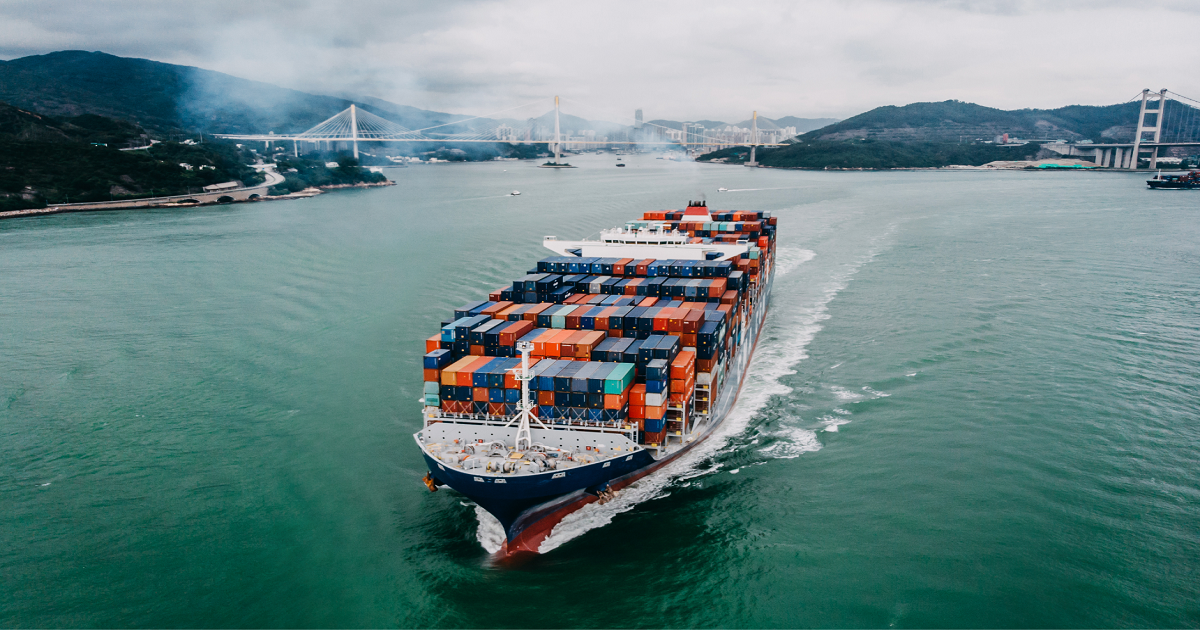
Container ships, bulk tankers and LNG (liquified natural gas) tankers are how this rerouted trade physically moves around the world. The closure of the Strait means that oil and other goods are shipped from further afield, taking longer routes to get to their destinations, which benefits vessel operators and owners.

An LNG tanker sailing from Qatar, the world’s largest LNG export hub, to Tokyo, could make the voyage in 15 days in 2025. With Qatar now blocked off, the same tanker shipping gas from Houston to Tokyo through the Panama Canal or the Cape of Good Hope takes 25-35 days, or an additional 10-20 days depending on the route taken.

Freight rates have also risen, adding to the windfall for shipping operators. Like surge pricing on ride-share apps during rush-hour traffic, commercial shipping rates have spiked since the beginning of the conflict. The Baltic Dry Index, which measures the spot price to ship bulk commodities, has soared 68% since March 1.

Wider regional trade impact

Adding to the regional supply shock, another important but less talked-about trade route is also restricted: the Bab el-Mandeb Strait, a narrow entrance to the Red Sea and the gateway to the Suez Canal. The Iran-backed Houthi movement has stepped up threats to attack commercial shipping after the escalation of hostilities in Iran.

As the map below from the Guide to Alternatives illustrates, both Hormuz and Bab-el-Mandeb are critical trade choke-points. The simultaneous disruption of both means maritime trade must divert around the Arabian peninsula.  A detour around Africa’s Cape of Good Hope adds 3,500 nautical miles and 10-14 days per voyage.

Shipping as a geopolitical hedge

In a portfolio context, exposure to maritime transportation can act as a geopolitical hedge since the earning power of vessels can improve when trade is disrupted. Ships must spend more time in transit, which means fewer available vessels, tighter capacity and higher freight rates.

For investors with access to alternative investments, private market transportation strategies can provide investors with a source of durable cash flow which has low or negative correlation to public markets.

By Aaron Mulvihill - May 15, 2026

feea3ae6-4fa4-11f1-854f-bf2208def8ee
  • Commodities
  • Geopolitics
  • Alternatives
  • Transport