


Chief Global Strategist
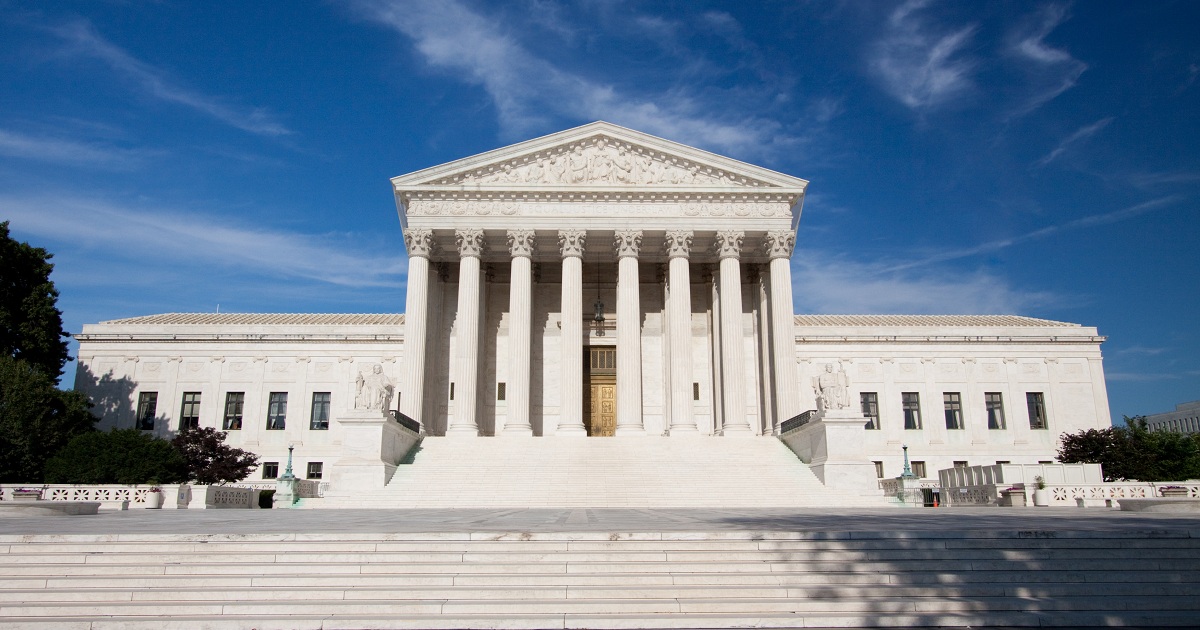
On Friday, the Supreme Court released a long-awaited decision, ruling that the President’s imposition of tariffs, using the 1977 International Emergency Economic Powers Act, otherwise known as IEEPA, was illegal. The President held a press conference that afternoon and issued a proclamation announcing a general 10% tariff on imported goods, using a different statute and promised to invoke a third set of statutes to replace the overturned tariffs on a more permanent basis. On Saturday, he announced that the 10% tariff rate was being raised to 15%.
The initial market reaction to the decision and the President’s response was muted, probably because both were widely anticipated, at least in a broad sense. However, these latest developments will likely have significant economic and investment implications and so it is important to trace out the likely path of tariffs and their consequences from here.
In particular, it is worth considering where tariffs stand after the Supreme Court ruling, the impact of the President’s response, future presidential and legislative action, whether and how IEEPA tariffs will be refunded, how all of this will likely impact the economy and what this ultimately means for investors.
The Tariff Decision and the Administration Response
Let’s start with a brief review of how we got to this point.
On February 1st of last year, 12 days after his inauguration, the President announced tariffs on imported goods from China, Mexico and Canada, declaring that fentanyl trafficking was a national emergency and thus justified the use of IEEPA to impose tariffs. On April 2nd, IEEPA was again invoked to impose tariffs on goods from almost all foreign countries, either at a base 10% rate or, for most countries, a higher rate based on their trade surplus with the United States.
A consolidated case challenging these tariffs was brought by a toy company and a wine importer and they were joined by a number of other litigants.
On May 28th, the U.S. Court of International Trade, in a 3 to 0 ruling, determined that the IEEPA tariffs were illegal. The administration immediately appealed to the Federal Circuit of the U.S. Court of Appeals which left the tariffs in place while they considered the case.
On August 29th, the Federal Circuit upheld the decision of the Court of International Trade on a 7 to 4 vote. However, the court simultaneously stayed its own ruling pending an appeal to the Supreme Court.
On September 9th, the Supreme Court agreed to take up the case and promised expedited review. They held oral arguments on November 5th and last Friday, February 20th, 2026, they affirmed the rulings of the lower courts in a 6 to 3 decision.
This ruling, according to the Penn Wharton Budget Model group1, invalidates roughly 52% of customs duties collected last month. Penn Wharton also estimates that, by now, the federal government on the hook for $175 billion in refunds.
In a press conference on Friday afternoon, the President announced that he was going to impose an immediate 10% global tariff by declaring a “balance of payments emergency”, invoking Section 122 of the Trade Act of 1974. The White House announced later on Friday, that this 10% rate would take effect on Tuesday, February 24th at 12:01AM, although with exemptions for some agricultural products, certain critical minerals and metals, pharmaceuticals, some electronics and passenger vehicles. On Saturday morning, the President announced that he was increasing the 10% rate to 15%,
It should be noted that Section 122 tariffs can only remain in place for a maximum of 150 days without Congressional approval.
Both the President and Treasury Secretary Bessent have indicated that they intend to replace the IEEPA tariffs using other statutory authorities including Section 232 of the Trade Expansion Act of 1962 and section 301 of the Trade Act of 1974. These, respectively, require the Commerce Department to determine that imports of a specific commodity threaten national security or the U.S. Trade Representative to determine that a country is engaging in unfair trade practices. It is of course theoretically possible, that the President could allow the Section 122 tariffs to lapse after 150 days and then immediately declare another balance of payments emergency and impose them for a further 150 days.
All of these tariff actions may be challenged in courts by litigants claiming that the findings of the Commerce Department and USTR on national security and unfair trade practices are a sham or that the chronic U.S. trade deficit, (which, it should be noted, is largely due to a too high dollar and a chronic budget deficit rather than unfair trade practices), doesn’t constitute a “balance of payments crisis”. However, as such cases wind their way through the courts, the administration can take comfort in the willingness of the courts to let tariffs remain in place through the lengthy legal review process.
The Path Forward on Tariffs
So what happens next?
One immediate question concerns refunds. In multiple decisions over the past year, the U.S. Court of International Trade has ruled that plaintiffs have to wait for court proceedings to play out on the IEEPA tariffs. In these decisions, the court noted that the government, in defending these lawsuits, had promised to refund the money with interest if, after appeal, the tariffs were found to be illegal. The Court stated that the government would be “judicially estopped” from assuming a contrary position in the future.2 This suggests that importers will eventually be able to get their money back.
Over 300,000 importers had paid IEEPA tariffs as of mid-December.
Of course, the government should simply apologize to importers for illegally levying tariffs and make immediate arrangements for refunds. However, based on the President’s Friday press conference, it appears that the administration may drag its feet. That being said, there is little doubt that the government is required to refund the money and that the biggest importers have an interest in getting their money quickly so that most of the roughly $175 billion collected in IEEPA tariffs over the past year will likely be refunded to importers over the next year or two. This would boost corporate profits and proprietors’ income and add to the federal deficit which already looked likely to be close to $2 trillion this year.
On future tariffs, it is likely that the administration will use the other authorities granted to it by Congress over the years to maintain at least the current tariff revenue stream of roughly $30 billion per month.
Two final notes are worth making here.
First, while some have called Friday’s Supreme Court decision a significant curtailment of presidential power, in practice it may have little impact if the President continues to invoke one legal authority after another and the courts continue to allow the effects of his actions to remain in place while they consider the issues.
One remedy for the current tariff confusion would be for the Congress to pass a law repealing all the tariff authorities it has granted to the President over the years under previous trade acts. However, while these laws passed by a simple majority in Congress, if the Congress passed legislation to curtail the President’s powers in this area and the President vetoed the bill, it would take a two-thirds majority in both chambers to over-ride the veto. One wrinkle in our venerable but flawed constitution is that it is much easier for the Congress to cede power to the President than to reclaim it.
Second, the President will still likely push for tariff rebate checks in his State of the Union address on Tuesday. While these payments could negate any budgetary benefit from tariffs this year, they would also boost consumer spending and overall GDP growth when they are paid out and for a few months thereafter.
Economic Impacts and Investment Implications
So what are the net economic impacts of the tariff decision and the President’s response?
First, U.S. imports of goods last year amounted to $3.438 trillion. 15% of this is $516 billion dollars so, at a first pass, it would seem like the revenue impact would be an additional $43 billion per month. However, the proclamation announcing the Section 122 tariffs has a very long list of excluded categories and notes that the tariffs do not apply to USMCA-compliant Mexican and Canadian imports. Given this, and given that these tariffs may last for 150 days or less, it may be best to just assume that the level of tariff revenue will remain much as it has been in recent months at roughly $30 billion per month through the end of 2026.
If this occurs, the next few months may still see some ramping up in inflation as companies pass on the cost of old and new tariffs to consumers who, temporarily flush with tax refunds and tariff rebate payments, may be a little less resistant to price increases. However, the impact of tariffs on consumer prices should plateau over the next few months so that, by early 2027, their impact on year-over-year inflation should fade out entirely.
Tariffs will likely be a more permanent drag on economic growth and productivity as both the level of tariffs and the uncertainties about future tariffs act as deterrents to investment spending. That being said, AI capital investment is acting as a powerful counterforce, adding to both output and productivity economywide.
In a similar fashion, while tariffs are a negative for corporate earnings, other factors such as the AI spending boom and the corporate tax provisions of OBBBA allowed S&P 500 operating earnings to surge by more than 12% in 2025.
Finally, however, it should be remembered that tariffs are a regressive tax since they are levied at a flat rate on goods imports (rather than on goods and services) and on consumption rather than income. They consequently tend to worsen already dramatic income inequality. They also invite retaliation and, while our trading partners have generally been slow to retaliate directly, their aggressive efforts to carve out new global relationships outside of their trade with the United States provides some indication of their long-term costs.
For investors, the Supreme Court decision and the administration’s aggressive response suggest continued uncertainty about U.S. trade policy. This, combined with diminishing inflation impacts but persistently negative growth impacts suggest that the Federal Reserve may feel it necessary to cut rates further in late 2026 and in 2027. This, in turn, could result in further downward pressure on the dollar. For investors, this points to a continued need to increase their still meagre allocations to international equities as part of a more globally diversified portfolio.