

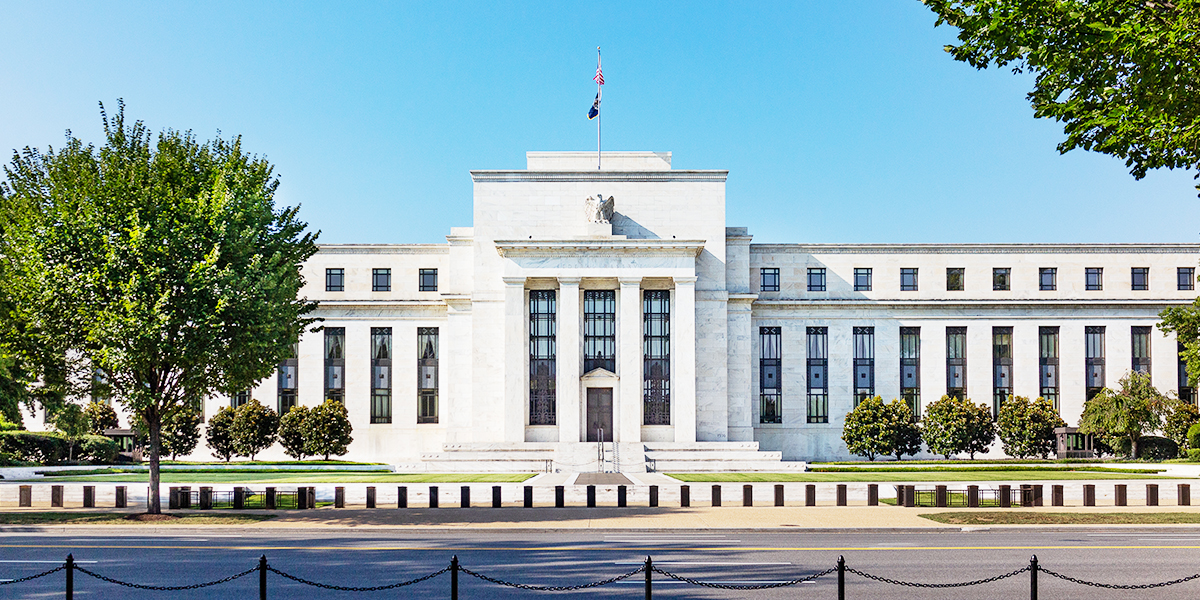
During the press conference, Chair Powell’s comment leaned hawkish, and he again described today’s cut as a “risk management” move.
Amid the government data drought, the Federal Reserve voted to cut interest rates by 25 bps at its October meeting, bringing the federal funds rate target range to 3.75% to 4.00%. There were both dovish and hawkish dissents—Stephen Miran voted to cut rates by 50 bps while Kansas City Fed President Jeffrey Schmid voted for no change.
With the government shutdown keeping the Fed in the dark on more recent economic developments, much of the statement language referred to past data…
- Comments describing general economic activity were modestly more optimistic but recognized data challenges, noting that “available indicators suggest that economic activity has been expanding at a moderate pace.”
- Language describing the labor market was largely unchanged, with tweaks noting that recent indicators have reinforced the Fed’s existing view of slowly mounting downside risks to employment.
- Inflation was described as having “moved up since earlier in the year…,” acknowledging inflation’s upward trend in recent months.
During the press conference, Chair Powell’s comment leaned hawkish, and he again described today’s cut as a “risk management” move. Notably, he emphasized that there were “strongly differing” views regarding how the Committee should proceed in December, and that the meeting is “far from” a foregone conclusion. Investors are now pricing in a ~65% chance of a December cut, down from 92%.
Mounting pressures in the funding market put greater focus on the Fed’s balance sheet. Market rates have held above administered rates in recent weeks. Moreover, while reserves likely remain abundant, balances held in the Fed’s overnight reverse repo facility (a measure of excess liquidity) have fallen to near zero. To preemptively avoid another 2019 episode, the Federal Reserve will conclude its quantitative tightening program on December 1. Thereafter, proceeds from maturing mortgage-backed securities will be reinvested in Treasury securities to shorten the duration of the Fed’s asset portfolio and align its composition more closely with the outstanding Treasury market.
Assuming no further disruptions from the government shutdown, the Committee will receive three jobs reports and two inflation reports before its next meeting. An improvement in employment conditions or a spike in inflation could keep the Committee on hold, but if conditions evolve as we expect, a December rate cut remains likely. However, the more hawkish tone from today’s meeting suggests there may be room for only one rate cut in 1H26. That said, should data disruptions persist into December, the Committee may opt to hold rates steady to wait for more clarity.
While the economic outlook appears benign, recent funding and credit market stress remind us that unseen problems can brew beneath the surface. To be clear, investors shouldn’t avoid risk assets. However, with equity multiples elevated and credit spreads tight, investors should avoid making any speculative bets.