


Electrification is accelerating, driven by AI compute, data-center buildouts, and broad-based demand growth, but grid infrastructure is not keeping pace. The constraint is increasingly structural: the U.S. added just 475 transmission line miles in 2025, roughly 20% of 2015 levels1, as capital is redirected toward maintenance, hardening, and equipment replacement rather than net-new expansion. Frictions compound across the value chain, with transformer lead times roughly doubling, permitting timelines stretching to approximately seven or more years, as fewer than 20% of U.S. power projects seeking interconnection from 2000 to 2019 reached operation by 20242.
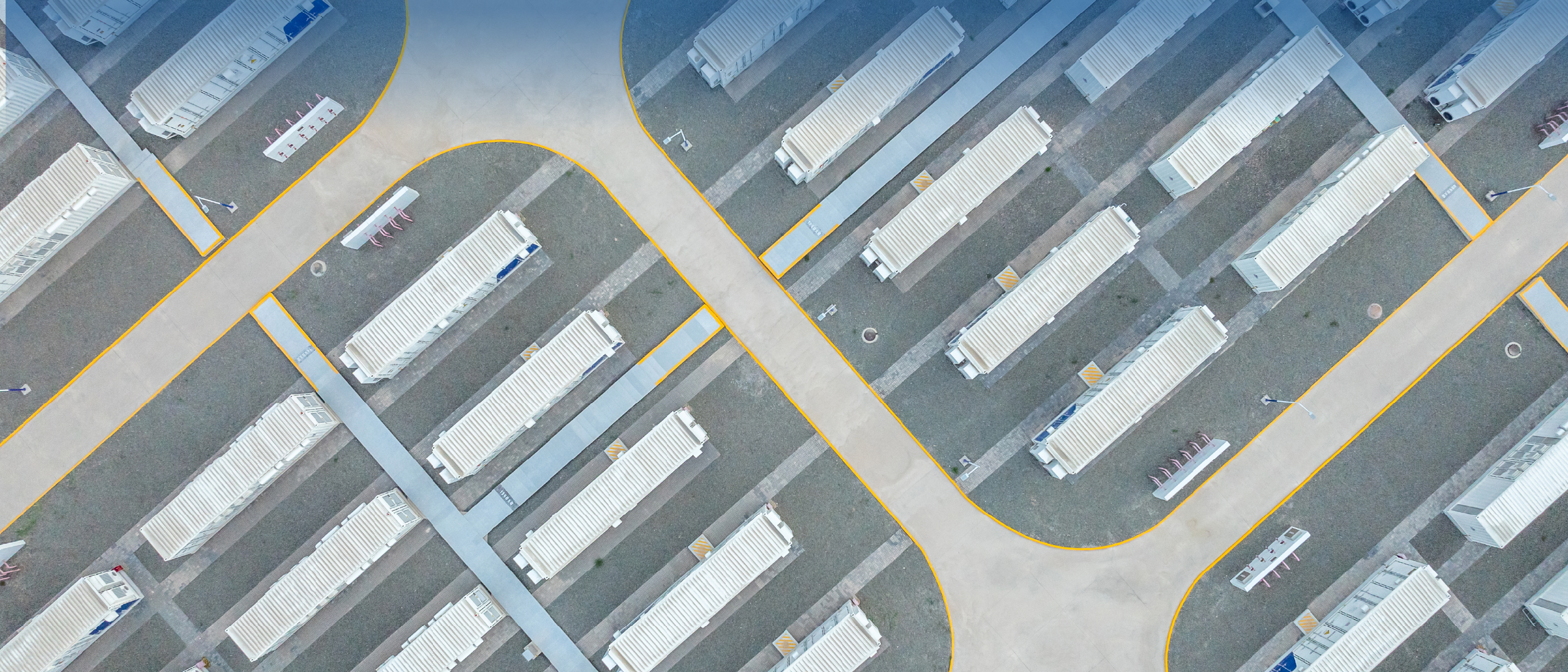
Against this backdrop, battery energy storage systems (BESS) and grid modernization represent durable investment themes that monetize scarcity and improve system utilization. Storage economics have reset meaningfully: lithium-ion battery costs fell from approximately $1,474/kWh in 2010 to about $108/kWh today3, with a further 33% decline expected by 2030. Deployment is scaling rapidly, with 122 GW of global storage forecast for 20263. The complementary opportunity set is grid-enhancing technology, including reconductoring and voltage uprating, that can unlock up to 100% incremental capacity on existing lines, typically faster and cheaper than greenfield transmission.
Given the structural nature of these constraints and the accelerating policy and cost tailwinds behind storage, key issues for investors now include grid access, storage economics, and supply-chain resilience:
Investor Takeaways
- Grid bottlenecks are structural, not cyclical. Transmission expansion is running at a fraction of historical rates even amid heavy spend, implying durable pricing power for constrained equipment producers and engineering and procurement services..
- BESS converts grid constraints into operational flexibility. Services such as frequency regulation, energy arbitrage, and backup capacity improve system stability and power pricing, benefitting both ratepayers and grid operators. Texas scaled from less than 1 GW of energy storage in 2021 - when Winter Storm Uri caused grid blackouts - to a current 14 GW of operational capacity4.
- On-site batteries solve the speed-to-power problem for AI data centers. Aligned Data Centers is deploying a 62 MWh battery at a Pacific Northwest facility, allowing the data center to come online 5 years faster than traditional grid timelines. Funded by Aligned but placed on the utility side of the meter, the battery supports variable compute loads and broader grid services while shielding ratepayers from additional costs.
- Cost curves and co-location economics are compounding. Lithium-ion pricing has fallen 36% below 2020 levels, while solar-plus-storage co-location reduces development capex by approximately 20%, improving risk-adjusted returns3. Moreover, battery storage projects can claim U.S. investment tax credits through 2035, while credits for other renewables sunset on earlier timelines.
- Supply-chain concentration is the swing risk. China's dominance across minerals and cell manufacturing concentrates geopolitical and trade-policy risk that can reprice U.S. project economics. However, momentum is building in the U.S. supply chain as leading original equipment manufacturers (OEMs) like Ford repurpose EV manufacturing capacity for BESS production to compete in the accelerating grid-scale storage market.
- Preferred exposure favors enablers over commodity assets. Companies like GE Vernova (power and transmission equipment), Quanta Services (project execution and skilled labor), and NextEra Energy (scaled renewables-plus-storage development experience) sit at the bottlenecks where pricing power is strongest.