
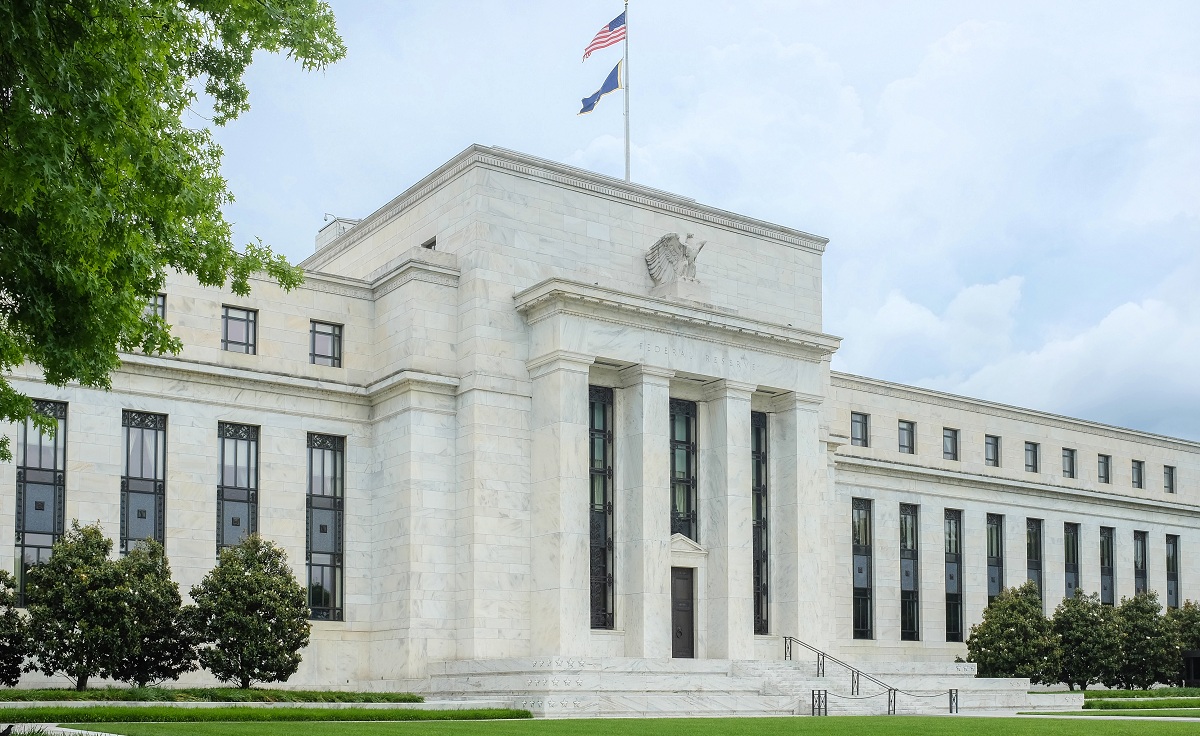
For investors, the week ahead will be dominated by the Fed decisions.
Possibly, some AI chatbot will spot the obvious grammatical error in that last sentence and change it from “the Fed decisions” to “the Fed’s decision”. However, there are really two decisions to consider: First, what will the Fed decide to do about interest rates and second, what will the President decide to do about the Fed. Both have important implications for the economy and investing.
The Fed’s Decision
On the first issue, the framework outlined by Jay Powell at recent press conferences suggests no reason to cut interest rates this week.
In particular, he has emphasized that the Fed will continue to focus on its goals of maximum employment and price stability. In their June Summary of Economic Projections, the Federal Open Market Committee (FOMC), reconfirmed that this implied long-run targets of 4.2% for the unemployment rate and 2.0% for year-over-year consumption deflator inflation. Powell has also noted that, to the extent that they are missing both of these targets, they will consider how far the economy is from each of them and how long it might take to return to them.
The latest readings look pretty good, with the unemployment rate coming in at 4.1% in June and consumption deflator inflation of 2.3% year-over-year in May. However, at their last meeting, FOMC participants expected both of these numbers to worsen in the months ahead, with unemployment averaging 4.5% in the fourth quarter and year-over-year inflation rising to 3.0%.
Since that meeting, prospects on unemployment have, if anything, improved.
We estimate that this Wednesday’s report will show that real GDP grew by 2.9% in the second quarter, (although, given recent violent swings in trade and inventory numbers, we wouldn’t be surprised by a gain of anything between 2.0% and 3.5%). We also estimate that real domestic final sales, which excludes these volatile categories, grew by 1.0% annualized, following a 1.5% increase in the first quarter. While this is not robust, it doesn’t signal a collapse either.
Moreover, entering the third quarter, there are signs that the economy is continuing to grow – albeit slowly.
Industry reports suggest that light-vehicle sales are bouncing higher in July, as auto companies have resisted raising prices, despite the early effects of higher auto tariffs, while domestic airline travel appears to have stabilized following a weak spring. Conversely, the hotel industry is clearly in a slump, with occupancy rates below year-ago levels in 14 of the last 16 weeks. Home construction is also weak, hurt by a lack of affordability and deteriorating demographics, even in the face of a rising stockpile of unsold new and existing single-family homes.
Business fixed investment is, so far, being sustained by AI enthusiasm and still strong profit growth despite business caution about the outlook.
Meanwhile, the latest inventory data, while showing a sharp decline in accumulation, have yet to show significant destocking. Exports have remained resilient as our trading partners have hesitated to impose retaliatory tariffs while negotiating with the U.S. administration. Data due out on Tuesday should shed further light on international trade and inventories in June.
Finally, it appears that weakness in federal government spending is being partially offset by strength in hiring at the state and local levels, preventing government cutbacks from being too severe a drag on GDP.
We do expect that tariffs will contribute to weakness in the second half of the year as companies pass on part of the cost of higher import taxes to consumers. However, the extent of this weakness is still very hard to gauge, particularly in the absence of final decisions on tariff rates. We will get some further clarity on this issue this week with the just-announced U.S./E.U. agreement and as we reach the President’s August 1st deadline for tariff decisions.
The growth outlook is also being impacted, of course, by the immigration crackdown.
In the first half of 2025, we estimate that real GDP grew at a 1.2% annualized pace while non-farm payrolls increased by 130,000 per month. In the second half, we expect real GDP growth to be close to zero, with non-farm payrolls rising by less than 100,000 per month. Despite this, because of the impact of the immigration crackdown on labor supply, we believe that the unemployment rate will still be below 4.5% by the fourth quarter of this year.
Looking into 2026, a bumper season for income tax refunds, thanks to the recently passed OBBBA, should allow economic growth and the unemployment rate to stabilize at 1.5%-2.0% and 4.0%-4.5% respectively.
The inflation impact of higher tariffs has also largely yet to unfold.
While the average tariff rate on imported goods over the past few months has been close to 15%, the effective tariff rate – measured as tariff revenue divided by goods imports – appears to have been just 10% in June and July. This could reflect the fact that goods already in transit when the new tariffs were announced were exempt from these tariffs. Moreover, even where tariff revenues have been received, their impact on consumer prices has been delayed, since it takes some time for newly imported goods to reach store shelves. We expect the impact of these tariffs to flow through to core goods inflation over the next few months, augmented by further tariff increases set to kick in at the start of August. Even under the conservative assumption that half of this cost will be absorbed by foreign producers and U.S. companies rather than U.S. consumers, we expect tariffs to push consumption deflator inflation above 3.0% year-over-year by the fourth quarter.
Fiscal stimulus from the OBBB act could then sustain this inflation into the first half of 2026 although thereafter, barring further shocks, inflation should once again begin to head down to the Fed’s 2% goal by the end of next year.
In summary, it appears that the economy will be further above 2.0% inflation than 4.2% unemployment by the end of the year. Moreover, we are starting from a place where monetary policy isn’t tight by historical standards. In the 50 years before the Great Financial Crisis, the federal funds rate averaged 1.84% above year-over-year core CPI inflation. In June, year-over-year core CPI inflation was 2.91%, suggesting that a funds rate of 4.75% would be neutral, at least from an historical perspective. This is well above the current 4.33% level of the funds rate, suggesting that policy is actually marginally easy.
Given all of this, along with a weakening dollar and a frothy stock market, it’s hard to make the case for any easing at this week’s meeting and we don’t expect one. It is quite possible, however, that at least two members of the FOMC will dissent from the Fed’s statement, arguing for an immediate rate cut on the grounds that tariff inflation is likely to be temporary.
The Decision about the Fed
A Fed decision not to cut will undoubtedly be met by heavy criticism from the White House and could lead to further speculation on whether the President might decide to try to fire Jerome Powell.
Chair Powell has made it clear that he believes that the President does not have the authority to do so and he has also signaled that he has no intention of resigning. Consequently, if the President attempted to replace Chair Powell immediately, it could lead to a very disruptive fight, likely only resolved by the Supreme Court. Moreover, if the President prevailed in this fight, markets might well conclude that this marked the end of Fed independence, potentially triggering a plunge in the U.S. dollar, a surge in long-term interest rates and a selloff in the stock market.
Because of this, the President may content himself by going down the more conventional path of nominating a potential Fed chair to the Fed governorship that will become vacant when Adriana Kugler’s term expires in January 2026. Alternatively, he could openly endorse an existing Fed governor to be the next chair when Jerome Powell’s term as Fed chair ends in May 2026.
Of course, deliberately nominating Fed officials on the explicit understanding that they will vote for lower interest rates, would itself somewhat undermine the independence of the Fed.
However, investors would probably look more favorably on this type of approach than a more dramatic attempt to fire the Fed chair, since, because of the institutional structure of the FOMC, this could only very gradually impact Fed decisions. In this connection, it is worth noting that the voting members of the FOMC include five regional Fed bank presidents, who are largely immune from federal government pressure, and seven Federal Reserve Board governors who serve 14 year terms, with one governor being replaced every two years. Because of this, even if the President picked a dove to replace Governor Kugler, he might not get another opportunity to replace an FOMC voting member until January 2028, when Jerome Powell’s term as Fed governor (as opposed to Fed chair) comes to an end.
Given the economic outlook, if this Wednesday’s decision includes two dovish dissents and if, as the markets have priced in, the Fed cuts in September despite rising inflation, it could well be taken as evidence that the Fed is already bending to the administration’s will, even without explicit action from the President. However, global financial markets might shrug this off, concluding that this was just a pragmatic decision of an independent Fed trying to maintain its position by bending so it doesn’t break.
However, there remains the risk that, in the aftermath of this week’s decision, the President could decide to try to replace Chair Powell as a way of asserting even greater control over the Fed. Such a move would be highly risky for the U.S. dollar as well as U.S. stocks and bonds. Hedging against such a risk is one more reason why investors may want to broaden their portfolios to include more international and alternative assets.