
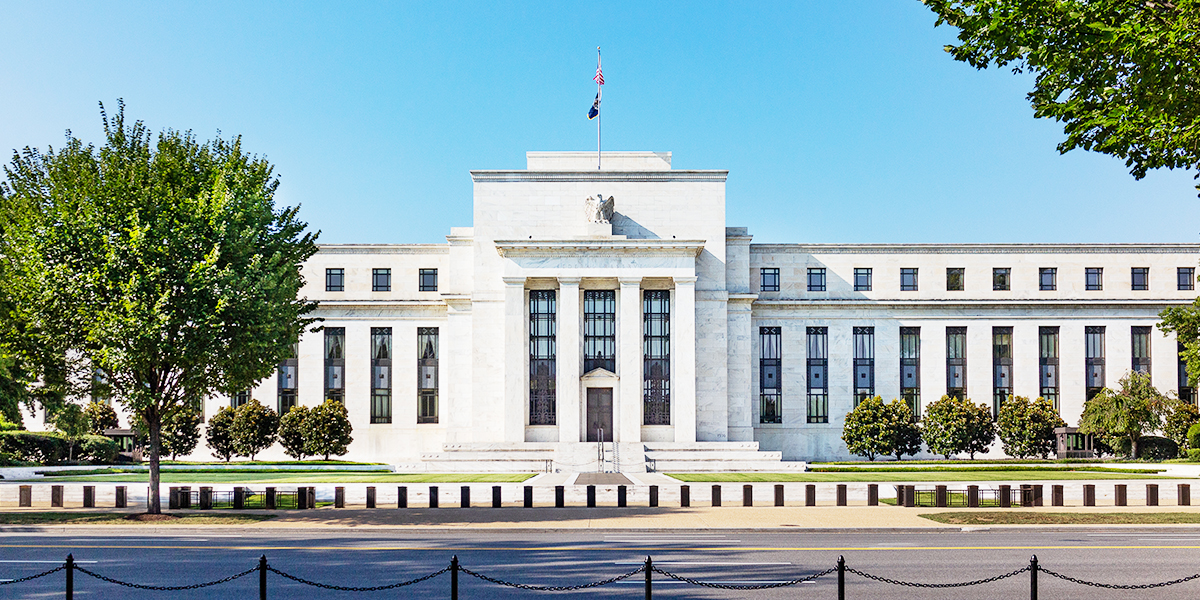
The Federal Open Market Committee (FOMC) held the federal funds rate at 3.50%-3.75%. The key statement change: inflation language was upgraded from “somewhat elevated” to “elevated", in part reflecting the recent increase in global energy prices”—a direct acknowledgement of the Middle East driven oil shock. The easing bias in describing policy outlook was maintained, but not without opposition. Four members dissented, with Miran again, electing to reduce rates by 25 basis points, while Hammack, Kashkari and Logan agreed with policy on-hold but opposed keeping the easing bias, arguing the inflation backdrop no longer warrants it.
Key takeaways from the press conference:
- Fed Chair Jerome Powell was forthcoming about his future at the FOMC and confirmed he will remain on the Board after his Chair term ends on May 15th for a period “to be determined”. His reasoning is due to the administration’s ongoing legal attacks against the U.S. Federal Reserve (Fed). He pledges to keep a low profile, support the incoming chair, and avoid any shadow-Chair dynamic.
- Markets are fixated on the number of dissents; however, the committee is navigating two simultaneous supply shocks: tariff driven goods inflation and energy driven headline inflation, both of which are driving some members to lean more hawkish. Powell still expects tariff effects to show up as a one-time price level shift, though a wait-and-see approach around the energy spike may be more appropriate.
- Powell remains committed to Fed independence. He argued Fed independence is about ensuring monetary policy decisions are made free of political considerations, which is foundational to U.S. economic credibility. He stated support for incoming Fed Chair Kevin Warsh in maintaining the Fed as an independent institution.
For investors, the Fed is likely to stay on hold for the foreseeable future. Pending price pressures are clearly seeping into more cautious views, but the bar to hike rates is still high. Given most of the committee feels current policy stance is within neutral, it can be patient as the conflict—and its ultimate impact on the economy and prices—unfolds. Market pricing has shifted hawkishly; the probability of a hike is now at 40% by next April. As a result, Treasury yields rose across the curve and stocks fell.
Altogether, the 8-4 voting split speaks to a lack of cohesion at the Fed during a time of elevated uncertainty, and this could get worse once Warsh replaces Powell. Moreover, the type of communication (statement, dot plot, etc.) and frequency may be more immediate changes under a Warsh-led Fed. We still support the Fed’s easing bias as supply shocks tend to be short-lived, however it is important for investors to diversify across high-quality attractive yielding fixed income, stocks with resilient earnings growth, still actively valued international assets and a broad basket of commodities and real assets.