

Global Bond Monitor Q4 2025
This piece uses five charts from the Guide to the Markets to explain why, despite an uncertain economic backdrop and recent volatility, we still see compelling opportunities across the fixed income landscape.
Investors have typically looked to bonds for two outcomes:
1. A steady stream of income
2. Diversification against riskier assets if the growth outlook deteriorates.
In the decade following the global financial crisis the ability of bonds to offer either of these elements had steadily diminished as a long bull market compressed yields to record low levels. The subsequent reset in 2022 was deeply painful. As yields normalised, the global aggregate bond index fell by 16%, the worst annual decline since the index began in 1990. But the fixed income reset is now complete. Yields have established new trading ranges and the role of bonds in a balanced portfolio has been restored.
A combination of tariff-related inflation concerns and expansionary fiscal policy across the developed world has kept bond market volatility high and led some investors to remain nervous about the asset class. However, taking a step back it is clear that the two key characteristics bonds have historically provided remain relevant, and the bond market of today is not the same as the bond market of 2022. With prudent risk management, fixed income still deserves its place in multi-asset portfolios.
-
Diversification potential has improved
-
Higher starting yields give bonds more breathing room
-
Changing dynamics in European fixed income provide new opportunities
-
High starting yields have historically led to positive returns
-
Corporate fundamentals should support tight credit spreads
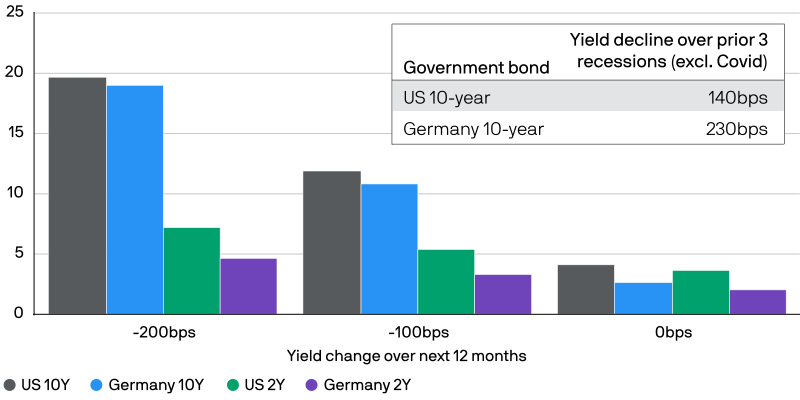
Our first chart considers the total return that investors would receive from government bonds, depending on how yields move over the next 12 months. If the economic outlook deteriorates over the coming months, the pressure on central banks to cut interest rates will only intensify. In this scenario, bond yields still have significant room to fall from current levels. In the event that 10-year government bond yields fell by 100 basis points over the next 12 months, this would deliver a return of more than 10%.
This is the kind of meaningful diversification against equity losses that multi-asset investors rely on when constructing balanced portfolios, which has not been available for several years given the very low level of yields.
Government bond return scenarios
%, total return over 12 months
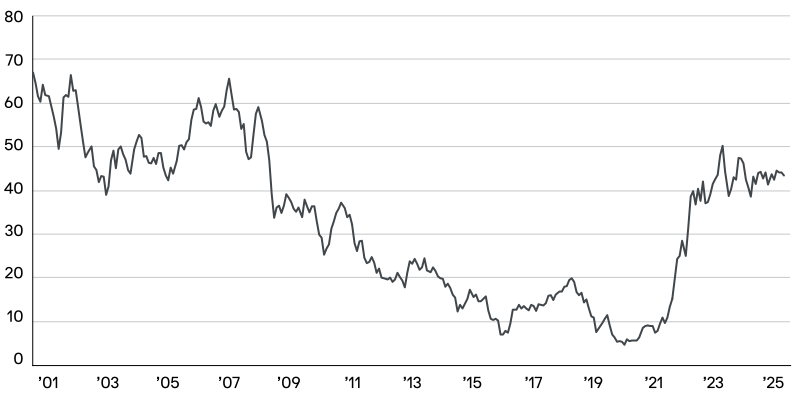
Global rates volatility remains elevated as governments grapple with fiscal realities, and markets shift their focus to whichever country is currently in the spotlight. However, these pressures are reflected in higher starting yields which provide a meaningful buffer against bond losses. The yield cushion on global government bonds, which shows how much sovereign yields could rise over 12 months before capital depreciation wipes out one year’s worth of income, has risen from its pre-pandemic low to around 45 basis points. Fixed income investors thus benefit from a substantial buffer against ongoing policy-related uncertainty.
Global government bond yield cushion
Basis point change over 12 months
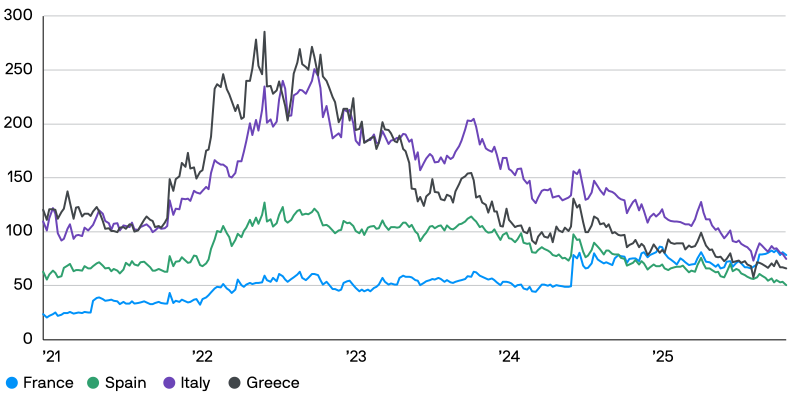
In Europe, peripheral countries, which had long been seen as lower quality credits, are looking increasingly attractive. A combination of stronger growth, helped by ongoing fiscal transfers from the European recovery fund, and fiscal consolidation following the eurozone sovereign debt crisis has benefited countries like Italy and Greece which have seen the spread between their bonds and German Bunds shrink. Conversely France, which had been part of the European core of lower risk countries, has struggled to resolve its fiscal impasse and has seen its spread widen. Nimble investors who can access the full opportunity set of European bonds can use this changing dynamic to manage country specific risks and improve returns.
Spread to German 10-year government bond yield
Basis points
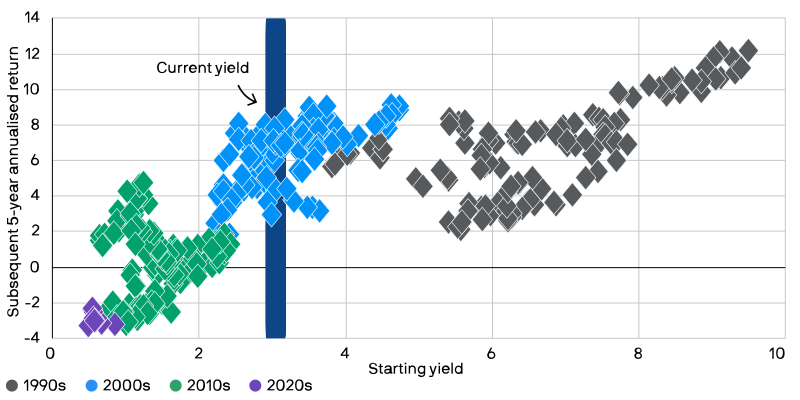
Our fourth chart looks at the impact of starting yields on subsequent returns. Investors are aware of the impact of equity valuations on subsequent medium-term returns, and the same dynamic is true in fixed income. After the period of low interest rates following the global financial crisis, government bond yields have now returned to a more normal range. This reset in yields significantly improves the return profile of fixed income as higher starting yields have historically led to higher subsequent returns. From current starting yields, investors have typically enjoyed annualised returns of around 6% over the subsequent five years.
Global government bond yields and subsequent 5y returns
%, subsequent return is % change annualised
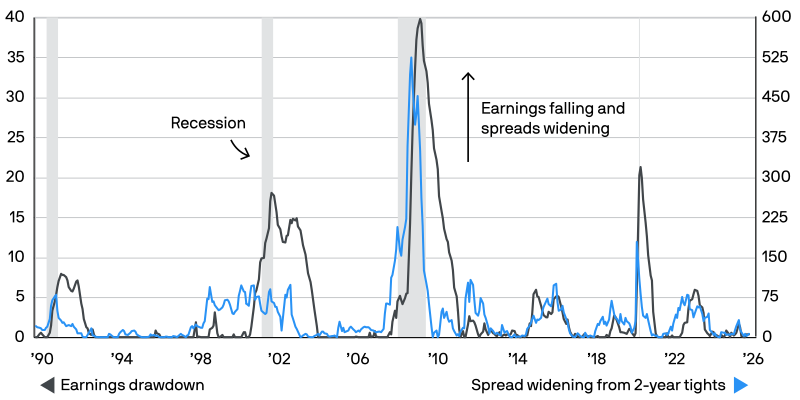
A combination of attractive all-in yields and resilient corporate fundamentals has led to heightened demand for investment grade corporate credit. This has compressed corporate spreads to historically low levels. Investors may be tempted to wait for a more attractive entry point, however they could be waiting for some time. Credit spreads are biased towards the tighter end of their ranges and only widen significantly when growth weakens materially. As our fifth chart highlights, so long as corporate earnings don’t fall credit spreads should remain contained and investors can step out into credit to capture the additional income on offer.
US earnings drawdowns and US investment grade spreads
% drawdown from previous peak (LHS); basis points (RHS)
Conclusion
The opportunities available in fixed income remain attractive. The reset higher in yields means bonds can deliver sustainable income in the medium term, and provides a buffer against further volatility. Absent a shock to growth, yields and spreads are likely to remain contained and investors should position their portfolios to capture the income on offer. However, if the outlook does deteriorate then government bond yields have room to fall, providing diversification against equity losses. These factors mean that after a decade in the doldrums, the role of bonds in multi-asset portfolios has been restored.