

logo
  • Funds
    Overview

    Fund Explorer

    • Investment Trusts
    • OEICs
    • ETFs

    Capabilities

    • Investment Trusts
    • Fixed Income
    • Equities
    • Multi-Asset
    • ETFs

    Fund Information

    • Fund news and announcements
    • Regulatory updates
    • Administrative information
    • Policies
    • Legal Documents
    • Fund Management Charges
    • Assessment of Value
  • Investment Themes
    Overview
    • Sustainable investing
  • Insights
    Overview

    Market Insights

    • On the Minds of Investors
    • The Weekly Brief
    • Investment Principles
    • Investment Outlook 2026
    • Monthly Market Review
    • Foundations of Alternatives
    • Why Alternatives?
    • Investing in your future

    Portfolio Insights

    • Asset Allocation Views
    • Fixed Income Views
    • Equity Views
    • Investment Trust Insights
  • How to Invest
  • About Us
    Overview
    • Diversity, Opportunity & Inclusion
    • Our Leadership Team
  • Contact Us
  • Role
  • Country
Manage your account
Search
Menu
Search
You are about to leave the site Close
J.P. Morgan Asset Management’s website and/or mobile terms, privacy and security policies don't apply to the site or app you're about to visit. Please review its terms, privacy and security policies to see how they apply to you. J.P. Morgan Asset Management isn’t responsible for (and doesn't provide) any products, services or content at this third-party site or app, except for products and services that explicitly carry the J.P. Morgan Asset Management name.
CONTINUE Go Back

Marketing Communication

History proves that the key to successful stock market investing is time in the market, and hence that investors with the endurance and patience to adopt a long-term perspective will be rewarded over time. This is especially true for investment in medium and smaller-sized companies which have the capacity to grow into larger businesses but need time to realise their full potential. Indeed, it may surprise many to learn that the UK’s medium and smaller-sized companies have generated higher returns than the UK’s largest companies, as well as outperforming global markets, over the long-term1.

The Mercantile Investment Trust (MRC) targets this vibrant, innovative, growth-oriented sector of the UK market, and its investment approach is the embodiment of the kind of enduring, patient investing that delivers long-term success. The Mercantile’s history stretches back 140 years, and with over £2bn in assets under management2, it is one of the largest UK equity investment trusts1, and also one of JPMorgan Asset Management’s flagship trusts. The Mercantile’s size also facilitates a very competitive ongoing charge and ready liquidity.

The Mercantile benefits not only from its longevity and size, but also from the long experience of its management team. Guy Anderson has more than 20 years’ industry experience, while Anthony Lynch has 15 years’ in the industry. The Mercantile’s strong long-term performance track record of outright gains and outperformance of the market, combined with a steadily growing dividend1, provide ample evidence of the value of their insights, expertise and management continuity, regardless of the prevailing market environment or economic or political developments. Long experience has taught Anderson and Lynch that periods of uncertainty, an inevitable risk factor for stock market investors, are often the ideal time for forward-looking managers to invest, as volatility generates opportunities.

The Mercantile is actively managed, and Anderson and Lynch are always alert for new opportunities, and quick to respond to emerging investment opportunities. They are equally willing to act when the investment case for a portfolio company deteriorates. However, their long-term horizon means that the trust also has some very longstanding holdings which have consistently contributed to portfolio returns over many years. For instance, its position in Softcat3 was initiated in 2015 when the company floated on the London Stock Exchange. Softcat was founded in 1993 to meet the nascent but fast-growing demand among businesses for IT infrastructure support. Continuing to grow its market share as a leading IT reseller– especially by boosting its business in the public sector – Softcat hit £1 billion in revenue in 20204. Now The Mercantile’s largest technology holding, Softcat revenues have scope to continue to grow as companies look for help in adopting generative AI solutions.

While some investors will always be tempted to seek quick and ‘easy’ short-term profits from the latest investment fad, this is a near-sighted and very risky approach likely to be fraught with disappointment, not to mention capital losses. By contrast, The Mercantile’s more considered, patient approach has delivered the kind of results that testify to the enduring merits of investing for the long-term.
1 The Mercantile Investment Trust plc Annual Report & Financial Statement 2025.
2 Data as at 9.6.25 Source Association of Investment Trust Companies.
https://www.theaic.co.uk/companydata/mercantile-investment-trust
3 The companies above are shown for illustrative purposes only. Their inclusion should not be interpreted as a recommendation to buy or sell.
4 https://companiesmarketcap.com/gbp/softcat/revenue/#google_vignette
 
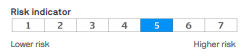
The risk indicator assumes you keep the product for 5 year(s). The risk of the product may be significantly higher if held for less than the recommended holding period.
Investment objective: Aims to achieve capital growth through investing in a diversified portfolio of UK medium and smaller companies. It pays quarterly dividends and aims to grow its dividend at least in line with inflation. The Company’s gearing policy is to operate within a range of 10% net cash to 20% geared.
The value of investments and the income from them can go down as well as up, and you may not get back the amount originally invested.
Key Risks: External factors may cause an entire asset class to decline in value. Prices and values of all shares or all bonds and income could decline at the same time, or fluctuate in response to the performance of individual companies and general market conditions. This Company may utilise gearing (borrowing) which will exaggerate market movements both up and down. This Company may also invest in smaller companies which may increase its risk profile. The share price may trade at a discount to the Net Asset Value of the Company. The single market in which the Company primarily invests, in this case the UK, may be subject to particular political and economic risks and, as a result, the Company may be more volatile than more broadly diversified companies. Companies listed on AIM tend to be smaller and early stage companies and may carry greater risks than an investment in a Company with a full listing on the London Stock Exchange.
  • UK