

logo
  • Funds
    Overview

    Fund Explorer

    • Investment Trusts
    • OEICs
    • ETFs

    Capabilities

    • Investment Trusts
    • Fixed Income
    • Equities
    • Multi-Asset
    • ETFs

    Fund Information

    • Fund news and announcements
    • Regulatory updates
    • Administrative information
    • Policies
    • Legal Documents
    • Fund Management Charges
    • Assessment of Value
  • Investment Themes
    Overview
    • Sustainable investing
  • Insights
    Overview

    Market Insights

    • On the Minds of Investors
    • The Weekly Brief
    • Investment Principles
    • Mid-Year Investment Outlook 2026
    • Monthly Market Review
    • Foundations of Alternatives
    • Why Alternatives?
    • Investing in your future

    Portfolio Insights

    • Asset Allocation Views
    • Fixed Income Views
    • Equity Views
    • Investment Trust Insights
  • How to Invest
  • About Us
    Overview
    • Diversity, Opportunity & Inclusion
    • Our Leadership Team
    • Our Commitment to Research
  • Contact Us
  • Role
  • Country
Manage your account
Search
Menu
Search
You are about to leave the site Close
J.P. Morgan Asset Management’s website and/or mobile terms, privacy and security policies don't apply to the site or app you're about to visit. Please review its terms, privacy and security policies to see how they apply to you. J.P. Morgan Asset Management isn’t responsible for (and doesn't provide) any products, services or content at this third-party site or app, except for products and services that explicitly carry the J.P. Morgan Asset Management name.
CONTINUE Go Back

Although the long-term evidence supporting quality investing is compelling, no investment approach outperforms in every environment. Periods of underperformance are natural when pursuing a highly disciplined investment approach, and quality is no exception.

The roots of quality’s recent underperformance can be traced back to around 2021. After a prolonged period in which higher-quality businesses had generally performed well, valuations had become stretched in places. As those valuations gradually normalised, some of the prior outperformance from quality also began to unwind.

This adjustment also occurred while investor attention was becoming increasingly concentrated on a narrow group of large US technology companies, leaving much of the rest of the market – including US smaller companies – relatively overlooked. Importantly, JUSC’s emphasis on valuation helped mitigate much of this pressure.

More recently, sentiment has played a decisive role. In 2025, as equities rebounded following April’s ‘Liberation Day’ sell-off, leadership gravitated towards higher-risk areas of the market. This closely resembled the ‘risk on’ behaviour seen in other market rallies such as those in 2003 and 2009, when markets were initially led by more speculative stocks with higher leverage, greater operational sensitivity and weaker underlying fundamentals.

Evidence from the US small cap market illustrates this clearly. The chart below shows that stocks exhibiting higher volatility and market sensitivity performed strongly, while the characteristics we favour – such as low leverage and high earnings quality – lagged.

Inevitably, this represented a challenging environment for quality investors. When sentiment favours risk-taking, investors may prioritise cyclical upside or balance sheet leverage over earnings durability or business model resilience.

However, history suggests that these phases do not last indefinitely. Previous cycles demonstrate that while lower-quality companies may lead the initial recovery, leadership typically broadens over time as investors refocus on the fundamental characteristics that drive long-term returns. That dynamic provides useful context when considering what may lie ahead for quality investors.
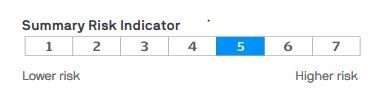
The risk indicator assumes you keep the product for 5 year(s). The risk of the product may be significantly higher if held for less than the recommended holding period.
Investment objective
The Company aims to provide investors with capital growth by investing in US smaller companies that have a sustainable financial competitive advantage. As the emphasis is on capital growth rather than income, shareholders should expect the dividend to vary from year to year. The Company focuses on owning equity stakes in businesses that the manager believes trade at a discount to intrinsic value, with strong management teams. The Company has the ability to use borrowing to gear the portfolio within a range of 5% net cash to 15% of net assets.
Risk profile
Exchange rate changes may cause the value of underlying overseas investments to go down as well as up. External factors may cause an entire asset class to decline in value. Prices and values of all shares or all bonds and income could decline at the same time, or fluctuate in response to the performance of individual companies and general market conditions. This Company may utilise gearing (borrowing) which will exaggerate market movements both up and down. This Company invests in smaller companies which may increase its risk profile. The share price may trade at a discount to the Net Asset Value of the Company. The single market in which the Company primarily
Investment Performance:
Past performance is not a reliable indicator of current and future results.
  • Global