

The JPMorgan American Trust portfolio managers look at stocks from many perspectives to find the best ideas for a concentrated, style-neutral US equity portfolio.
Incorporate a variety of perspectives
JAM may be the ticker symbol for the JPMorgan American Trust, but the investment process does not sandwich together its growth and value sleeves, nor does it pack too many holdings into its concentrated 40-stock portfolio.
Instead, JAM reflects the best US large cap equity ideas sourced from J.P. Morgan Asset Management’s teams of core/value and growth research analysts—true experts in their sectors who often have been covering the same 15-20 companies for their entire careers.
The growth and value portfolio managers each pick 20 stocks for the portfolio, bringing their own experience to the process. Both the value and growth teams look for high quality businesses. For value, that means durable businesses that keep customers coming back or perhaps have toll booth-like business models. These kinds of companies tend to have stable cashflows that can offer some inflation protection over the long term. Critical for the value team is buying these kinds of companies when the share price is not reflecting the strong business fundamentals.
The growth team seeks companies with high-quality management teams and large addressable markets where the opportunity set can expand. The team looks for situations where financial results might accelerate, such as an upcoming product launch or new management team, while also paying close attention to potentially negative scenarios, such as downward earnings momentum that might signal a time to sell.
Build it from the bottom up
On the surface, the portfolio characteristics such as earnings growth, the price-to-earnings ratio and beta, look similar to the benchmark S&P 500 index but a closer look at the holdings reveals some big differences derived from the bottom-up stock selection.
For instance, although the overall portfolio is currently slightly tilted towards growth, the top active positions—the biggest overweights vs. the benchmark—are dominated by companies chosen by the value team. These include Capital One and Loews, which are part of a broader overweight to financial companies focused on specialty finance and insurance companies. These businesses are built around collecting fees vs. banks that depend on lending activity. Energy companies Kinder Morgan and EOG Resources, and restaurant chain McDonald’s, are also big active weights.
Find new ways to express a view
Similarly, while some of the largest positions in the portfolio include Microsoft, Apple and NVIDIA, JAM is actually meaningfully underweight the information technology sector vs. the S&P 500.
Instead, the portfolio managers are looking to participate in the growth potential of artificial intelligence (AI)—which has been driving earnings in many technology companies—through businesses in other sectors that could benefit. Companies such as Trane Technologies and Quanta Services will help build essential infrastructure for data centers. Trane makes heating and ventilation systems needed to cool data centers while Quanta, which specialises in infrastructure for power generation, will be critical for building out the electric grid.
Next Era Energy, a utility company, is the largest provider of renewable energy, which will be a key source of immediate energy for power-hungry data centers as gas turbines will take longer to ramp up. Berkshire Hathaway, another large holding in the portfolio, is actually the largest generator of renewables. Kinder Morgan, one of the largest pipeline operators in US, will have a role to play linking natural gas to urban data centers.
Looking forward
Earnings for US companies may be more volatile as companies try to adapt to rapid changes in the macroeconomic and geopolitical landscape. The JAM portfolio managers have reduced their expectations for earnings growth this year but think profits will reaccelerate next year.
US stocks are also on the expensive side of history, with valuations driven higher by a relatively small number of companies. However, the investment team thinks that US equity returns could broaden to more companies and sectors, and are staking out active positions in 40 US stocks that can benefit in this changing environment.
Summary Risk Indicator
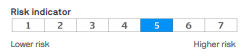
The risk indicator assumes you keep the product for 5 year(s). The risk of the product may be significantly higher if held for less than the recommended holding period.
Investment objective: The Company aims to achieve capital growth from North American investments by outperformance of the Company's benchmark, the S&P500 Index, with net dividends reinvested, expressed in sterling terms. The Company emphasises capital growth rather than income and when appropriate may have exposure to smaller capitalisation companies. The Company's gearing policy is to operate within a range of 5% net cash to 20% geared in normal market conditions. Gearing may magnify gains or losses experienced by the Company.
Key risks: Exchange rate changes may cause the value of underlying overseas investments to go down as well as up. External factors may cause an entire asset class to decline in value. Prices and values of all shares or all bonds and income could decline at the same time, or fluctuate in response to the performance of individual companies and general market conditions. This Company may utilise gearing (borrowing) which will exaggerate market movements both up and down. This Company may also invest in smaller companies which may increase its risk profile. The share price may trade at a discount to the Net Asset Value of the Company. The single market in which the Company primarily invests, in this case the US, may be subject to particular political and economic risks and, as a result, the Company may be more volatile than more broadly diversified companies.