

The asset class has outperformed the S&P 500 over the long term powered by the faster growth of small European companies.
It may come as a surprise to many investors that the MSCI Europe ex UK Small Cap Index has outperformed most major asset classes since 1999, including the US S&P 500. Despite the vaunted growth of US technology companies, European small caps harbour many “hidden gems”—companies the JPMorgan European Discovery Trust plc (JEDT) portfolio managers believe have the potential for exponential returns over time. In the past two decades, 50 small European companies have increased in value by over 10 times and some by substantially more. In the JEDT portfolio over the past 12 months ending 28 February 2026, four of the top five positive contributors to returns more than doubled in value.
The gem mine
How, and where, do the JEDT portfolio managers find these hidden gems? The investment team seeks to build a high-conviction portfolio of high-quality businesses that offer strong earnings growth potential and improving outlooks.
The starting point is a universe of European smaller companies with market capitalisations under EUR 7 billion; these companies have outgrown European large cap companies by roughly 2% per year, on average, over the long term. Companies with a market cap in the EUR 300 million – EUR 700 million range have produced some of the most attractive long-term opportunities for earnings growth and share price appreciation. Mergers and acquisitions (M&A), especially smaller bolt-on acquisitions that are typically easier to execute than large mergers, can also help these companies grow quickly.
Appraising value
In addition to growth, the investment team is focused on valuations—and the current environment in Europe is attractive for small cap companies. European small cap companies are not only trading at a discount to their long-term average, they are also trading at a discount to European large caps (whereas they have historically traded at a premium). In a global context, European stocks look attractively valued vs. US equities.
While the current valuations may be reflecting uncertainty in the macroeconomic environment, some macro factors should support European small caps. Smaller companies tend to have a higher proportion of domestic business, making them more likely to benefit from increased domestic spending on infrastructure and defence and less exposed to US tariffs. Small cap equities also react more positively to lower interest rates because the companies often have higher exposure to floating-rate bank debt compared to large cap companies.
“Old economy” outperformance
Many of the companies in the JEDT portfolio have exposure to three major structural trends: digitalisation, decarbonisation and healthcare innovation. While artificial intelligence (AI) may have a role to play across these themes, the portfolio’s strong performance last year—beating its benchmark and the US S&P 500 Index—did not come from technology stocks but rather primarily from “old economy” companies. The top three contributors to performance over the past 12 months ending 28 February 2026 were Bilfinger*, a German industrial services provider, Tecnicas Reunidas*, a Spanish engineering, procurement and construction firm specialising in energy projects, and Koninklijke Heijmans*, a Dutch construction company. Investors have rewarded Bilfinger’s* solid earnings growth with a higher multiple, leading to a strong performance in the company’s shares. Similarly, Tecnicas Reunidas* has grown earnings through strong execution and has a strong pipeline of projects that should support robust future growth.
The portfolio’s strong performance over the past couple of years since the current portfolio managers assumed responsibility reflects their focus on finding these fast-growing companies with significant long-term potential. Importantly, performance has been driven overwhelmingly by stock selection—and not from just a few stocks.
Looking ahead
While AI may be dominating the headlines and some equity markets, European small caps are home to a wide variety of businesses that are growing rapidly in unique market niches and may benefit additionally from higher government spending in Germany, and elsewhere in the region. The JEDT portfolio managers continue to believe this is an exciting time to be investing in smaller European companies.
*The companies above are shown for illustrative purposes only. Their inclusion should not be interpreted as a recommendation to buy or sell. The portfolio is actively managed. Holdings, sector weights, allocations and leverage, as applicable, are subject to change at the discretion of the investment manager without notice. Past performance is not a reliable indicator of current and future results.
Summary Risk Indicator
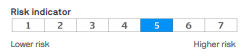
The risk indicator assumes you keep the product for 5 year(s). The risk of the product may be significantly higher if held for less than the recommended holding period.
Investment Objective:
The Company aims to provide capital growth from a diversified portfolio of smaller European companies (excluding the United Kingdom). As the emphasis is on capital growth rather than income, shareholders should expect the dividend to vary from year to year. The Company has the ability to use borrowing to gear the portfolio within the range of 20% net cash to 20% geared, in normal market conditions.
Risk Profile:
- Exchange rate changes may cause the value of underlying overseas investments to go down as well as up.
- External factors may cause an entire asset class to decline in value. Prices and values of all shares or all bonds and income could decline at the same time, or fluctuate in response to the performance of individual companies and general market conditions.
- This Company may utilise gearing (borrowing) which will exaggerate market movements both up and down.
- This Company invests in smaller companies which may increase its risk profile.
- The share price may trade at a discount to the Net Asset Value of the Company.