

As investors return to European equities, we believe JPMorgan European Discovery Trust (JEDT)’s fundamental approach, based on bottom-up stock selection, is well positioned to benefit.
Investors are returning to European equities
Europe is coming back into focus, as a combination of fiscal stimulus, lower interest rates and attractive valuations renew investors’ attention. Flows into European equities turned positive early in 2025 and accelerated through the year, with further strong demand seen in the opening months of 2026. While the conflict in the Middle East, and other geopolitical concerns, continue to cause volatility, the broad outlook for European equities remains broadly positive, in our view.
As investors return to European equities, we believe JEDT’s fundamental approach, based on bottom-up stock selection, is well positioned to benefit. In the fund, we only invest in our best European stock ideas, providing exposure to some of the region’s most compelling investment opportunities. Importantly, because the fund is dynamically managed, the portfolio can adapt quickly as the opportunity set moves, without letting short‑term noise dictate decisions. When the market backdrop changes, as it has done over the last year, the fund will react. And whenever we identify a great stock idea, you can be sure that it will be in JEDT.
Positioning is driven by our stock-level research. We look at our fundamental analysis, as well as our quantitative insights, and ask three questions: is it a good company? Is it attractively valued? And does the stock have an improving outlook (and, just as importantly, is that improvement under‑appreciated)? We want to buy great businesses, at the right price, and at the right time.
Positioning reflects the changing market backdrop
While we’re positive on Europe’s markets, the conflict in the Middle East is causing uncertainty over the immediate outlook. In terms of direct impact, while some European companies would be most obviously affected should oil prices remain high for a long period of time (airlines for example), we would expect to see winners, as well as losers, emerge across sectors.
More broadly, European markets continue to benefit from the move by investors to diversify their portfolios away from the technology and artificial intelligence stocks that have dominated US and Asian markets over the last few years. A lot of the US and Asian markets is now dependent on tech spending and earnings, but Europe has far less tech exposure. As flows return to Europe in search of diversification, the stocks that we think have the best potential to translate this renewed investor interest into durable returns can be found across a broad range of sectors.
Take the banking sector, which is a material part of the European index. Europe’s banks were hit badly by the zero interest rate environment of the 2010s, but cost cutting and digitalisation means the sector was able to regain its former profitability when rates turned positive, even though rates are structurally lower now than they were before the financial crisis. Over the last five years, Europe’s banks have outperformed the Magnificent Seven stocks1. We have holdings in several attractively valued European lenders, including BAWAG Group* in Austria and Banco Commercial* in Portugal.
Beyond this example, some of Europe’s most interesting stocks at the moment look to benefit from fiscal policy reforms.
Fiscal stimulus beneficiaries
When it comes to stock selection at the moment, policy really matters. So far, the fiscal theme has very much been a German story, which is why we like stocks such as Bilfinger*, a well-managed mid-cap German industrial stock that does most of its business in Germany and is well set to benefit from German infrastructure spending.
Other European governments are now also starting to step up investment in defence, digitalisation, infrastructure and the energy transition. That spending is uneven, but it is real, multi year and is expanding addressable markets for many European corporates. In terms of defence spending, for example, government money is increasing earnings growth expectations, but some markets will benefit more than others. And when it comes to defence, governments tend to support domestic companies. Among our preferred stocks is Spanish defence contractor Indra Sistemas*, which looks attractive given Spain lags far behind its Nato spending commitment.
The same is true for infrastructure spending, where spending has so far been slower to materialise as governments think how they can allocate spending most effectively. Planning and building large infrastructure projects is complex, after all. But government spending commitments are starting to be seen in earnings forecasts. Among the expected beneficiaries, we like French industrial SPIE*, which stands to benefit from the European electrification theme as governments transition to cleaner energy supplies.
*The securities above are shown for illustrative purposes only. Their inclusion should not be interpreted as a recommendation to buy or sell. Past performance is not a reliable indicator of current and future results.
1 Bloomberg, 31 December 2025
Summary Risk Indicator
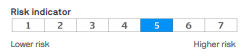
The risk indicator assumes you keep the product for 5 year(s). The risk of the product may be significantly higher if held for less than the recommended holding period.
Investment Objective:
The Company aims to provide capital growth from a diversified portfolio of smaller European companies (excluding the United Kingdom). As the emphasis is on capital growth rather than income, shareholders should expect the dividend to vary from year to year. The Company has the ability to use borrowing to gear the portfolio within the range of 20% net cash to 20% geared, in normal market conditions.
Risk Profile:
- Exchange rate changes may cause the value of underlying overseas investments to go down as well as up.
- External factors may cause an entire asset class to decline in value. Prices and values of all shares or all bonds and income could decline at the same time, or fluctuate in response to the performance of individual companies and general market conditions.
- This Company may utilise gearing (borrowing) which will exaggerate market movements both up and down.
- This Company invests in smaller companies which may increase its risk profile.
- The share price may trade at a discount to the Net Asset Value of the Company.