

Investing across a range of dividend-paying companies can generate growth and income for emerging market equity investors.
Marketing Communication
One sign of how emerging market (EM) companies have matured over the past decades is that the vast majority of the EM equity universe now pays a dividend. For the JPMorgan Global Emerging Markets Income Trust plc (JEMI), 90% of the 1000 stocks covered by the investment team offer some level of dividend yield, making them eligible for the portfolio.
Dividend-paying stocks offer more than income
JEMI focuses on dividend-paying stocks for several reasons. First, companies that are able to pay dividends are consistently generating enough free cash flow, which is an important characteristic for the high-quality companies the trust seeks. Other characteristics the team looks for are strong balance sheets and high returns on equity.
Second, the willingness to regularly pay out cash to shareholders indicates a focus on corporate governance, another key factor that is critical when investing in emerging market companies. Payout ratios have increased significantly in the last few decades and many of these companies have also started to buy back shares, which can improve stocks’ performance.
Notably, Chinese companies had long been net issuers of shares but that has changed with a significant level of share buybacks in China. The government in South Korea has also made a concerted effort to improve the level of corporate governance in South Korean companies and boost their share prices under the “Value Up” programme.
Lastly, JEMI focuses on stocks with a dividend yield because the income can contribute positively to performance while also allowing the trust to pay a dividend to its shareholders. Stable income adds to returns over time and can be especially helpful in weaker markets.
Range of income and growth
JEMI purposely invests across stocks with a range of dividend yields, exposing the portfolio to some companies that offer lower dividends but higher growth. This distribution of yield is a key differentiator between JEMI and many other EM equity funds that are more focused on growth.
Approximately 60% of the portfolio is invested in companies offering a dividend yield in the range of 3%–6%. Quanta*, manufacturer of electronic hardware, is an example of this type of company and is based in Taiwan, which has a strong dividend culture.
About 20% of the portfolio is invested in higher growth companies that have lower dividend yields, such as Tencent*, the Chinese internet conglomerate with strong potential to benefit from artificial intelligence (AI). Some of these faster-growing companies may be the bigger dividend payers of the future.
The remaining roughly 20% of the portfolio is invested in stocks with a dividend yield of over 6%. A number of financials companies, including Grupo Financiero Banorte*, a well-capitalised Mexican bank, often fall into this category.
Recent performance and current positioning
A top contributor to this performance over the past year ending 30 November 2025 has been Samsung Electronics*, the South Korean company that plays a key role in supplying DRAM and high-bandwidth memory needed for the buildout of AI. The National bank of Greece* was another top contributor to JEMI’s performance over this period. The portfolio managers added to both positions, which are among JEMI’s biggest active weights vs. the benchmark.
South Korea’s SK Hynix* is also participating in the growth of AI but JEMI did not own the stock based on its dividend history; as a result, this positioning detracted from performance. JEMI’s position in Realtek Semi* underperformed during the period but the portfolio managers added to this key holding as they continue to believe that the company has a strong chip design and healthy profitability metrics.
One notable change in the portfolio in recent months is that the portfolio managers have trimmed JEMI’s exposure to technology due to rising valuation and some concerns around whether the significant amount of AI capital expenditure will translate into strong returns. The portfolio has benefited greatly from the strong performance of many technology stocks and roughly 25% of the holdings are still in the sector. However, while JEMI was typically overweight technology in the past few years, the portfolio is now slightly underweight.
JEMI has increased its overweight to financials, which now make up roughly 30% of portfolio. Many financials, particularly banks, have strong balance sheets, high returns on equity and attractive yields.
JEMI has generally been outperforming its benchmark, the MSCI Emerging Markets Index, over the past year and the longer term, demonstrating the portfolio’s ability to outperform in a wide range of market environments. Looking ahead, the portfolio managers will be keeping an eye on valuations as they continue to look for a balanced mix of growth and income across emerging market equities.
* The companies above are shown for illustrative purposes only. Their inclusion should not be interpreted as a recommendation to buy or sell. The portfolio is actively managed. Holdings, sector weights, allocations and leverage, as applicable, are subject to change at the discretion of the investment manager without notice.
Past performance is not a reliable indicator of current and future results.
Summary Risk Indicator
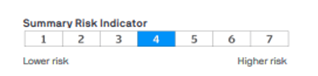
The risk indicator assumes you keep the product for 5 year(s). The risk of the product may be significantly higher if held for less than the recommended holding period
Investment objective
The Company aims to provide a dividend income, together with the potential for long-term capital growth from a diversified portfolio of emerging markets investments. It is free to invest in any particular market, sector or country in the global emerging markets universe and there are no fixed limits on portfolio construction. The Company has the ability to use borrowing to gear the portfolio to up to 20% of net assets where appropriate. Gearing may magnify gains or losses experienced by the Company.
Risk profile
- Exchange rate changes may cause the value of underlying overseas investments to go down as well as up.
- Investments in emerging markets may involve a higher element of risk due to political and economic instability and underdeveloped markets and systems. Shares may also be traded less frequently than those on established markets. This means that there may be difficulty in both buying and selling shares and individual share prices may be subject to short-term price fluctuations.
- This Company may invest in non-investment grade bonds which increases the capital risk and may have an adverse effect on the performance of companies which invest in them.
- External factors may cause an entire asset class to decline in value. Prices and values of all shares or all bonds and income could decline at the same time, or fluctuate in response to the performance of individual companies and general market conditions.
- This Company may utilise gearing (borrowing) which will exaggerate market movements both up and down.
- This Company may also invest in smaller companies which may increase its risk profile.
- The share price may trade at a discount to the Net Asset Value of the Company.
- The Company may invest in China A-Shares through the China-Hong Kong Stock Connect program which is subject to regulatory change, quota limitations and also operational constraints which may result in increased counterparty risk.
- As the portfolio is primarily focused on generating income, it may bear little resemblance to the composition of its benchmark.