


Jorn Veeneman
Global Market Strategist

Zara Nokes
Global Market Analyst
Published:
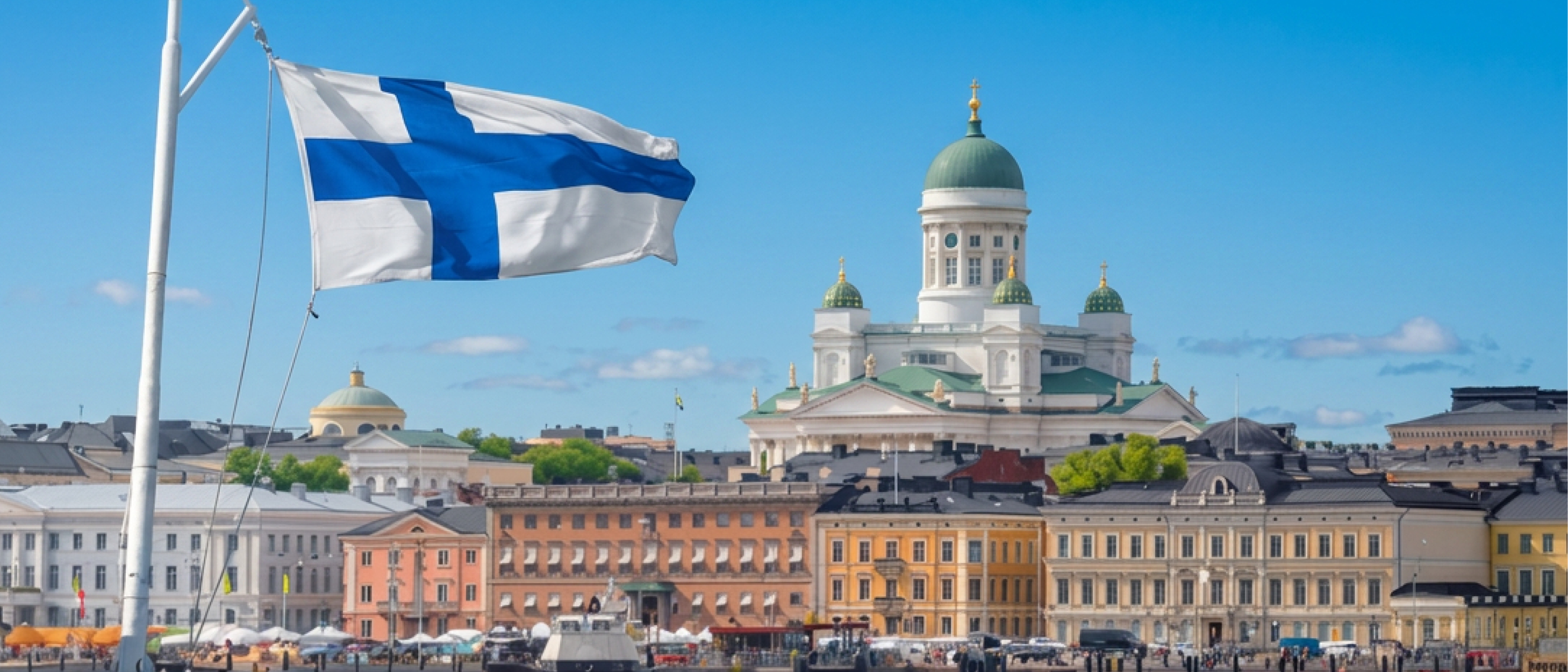
While Finns compare favourably with many other European countries in our study, they do not match the best-in-class outcomes achieved by their Swedish peers. There is still work to be done. The time to act is now.
Europeans have traditionally saved more than their US counterparts. Since the start of the pandemic, however, European households have been saving even more than usual, with a sizeable share parked in cash. In fact, since the end of 2019, Europeans have added an additional EUR 2.8 trillion to savings held in cash or cash-like instruments, taking the total cash pot to EUR 12.4 trillion.
This reliance on cash is resulting in a significant opportunity cost for individuals and is putting the financial outcomes that they deserve at risk. Although cash interest rates are higher than the dismal rates on offer for much of the last decade, real cash rates remain low or negative across most European Union (EU) member states once inflation is taken into account. Equity markets, by contrast, have provided much stronger returns in recent years, buoyed by strong corporate earnings as new technologies permeate the globe. By remaining in cash, individuals risk missing out on the long-term growth potential of equity investing and the opportunity to secure a more comfortable financial future.
High levels of cash savings are also having a significant negative impact on the European economy. The flipside of high household savings is, of course, lower consumption, which is harmful to economic activity unless these savings are channelled to businesses via investment. Savings held in cash are clearly not serving this purpose. Since the pandemic, both consumption and investment have grown substantially less in the eurozone than in the US.
While these two issues are increasingly being discussed, less attention has been paid to their impact on the political cohesion underpinning the EU. Limited participation by European households in rising stock markets may be contributing to wealth inequality and political discontent, proving fertile ground for populists to claim that the EU is not working for its member states.
We therefore need to turn the situation from lose-lose-lose to win-win-win. Helping households put their savings to work could improve their chances of reaching their financial goals, including a comfortable retirement, while also supporting business investment, reviving growth and removing the foundations of populist appeal.
The time to act is now
The need to address the problem is clear. The more difficult question is how. To help answer it, J.P. Morgan Asset Management commissioned an independent survey of household attitudes and behaviours across Europe, including a representative sample of 1,000 respondents from Finland. The Finnish findings, detailed below, show that while Finns compare favourably with many other European countries in our study, they do not match the best-in-class outcomes achieved by their Swedish peers. There is still work to be done. The time to act is now.
A survey of Finnish household attitudes to saving
This article draws on data from a survey commissioned by J.P. Morgan Asset Management and conducted in partnership with Opinium to understand the savings behaviour of European households.
The research surveyed a representative sample of 1,000 adults aged 18 to 65 in Finland, as part of a broader study of 17,000 adults across nine European countries. Fieldwork was conducted in the second half of July 2026.
What did we discover in Finland?
The Finns are not confident about their retirement outcome…
One of the first questions we asked Finnish respondents was how they felt about their financial future, particularly the standard of living they expected in retirement. The responses showed that Finns are less confident about their retirement outcomes than the European average. Only 8% said they were very confident that they would have the standard of living they wanted in retirement.
…and many lack a plan
This may partly reflect the fact that only 17% of Finns have a clear retirement plan that they are actively working towards, while 28% have not yet started thinking about retirement. Both figures compare unfavourably with the European average.
But are reasonably self-reliant
Compared with the rest of Europe, Finns are less likely to expect the government to fund their retirement, with many instead expecting to draw on an occupational pension scheme. However, unlike in the Netherlands, strong engagement with the pension system does not appear to translate into optimism about retirement living standards in Finland.
This may be due to the much more opaque nature of the pension system in Finland. Unlike in the Netherlands and Sweden, employer contributions and salary deductions are paid into the system, but there is no segregated account where every saver individually accrues contributions. Payouts are restricted to the pension fund the saver was last insured with, and the different pension funds are therefore jointly liable for all pension liabilities. Because of the pooled structure of the funds, unit-linked insurance – where savers can allocate freely within a pension account – is not a component of the second pillar. In short, Finns lack clarity on the relationship between what they are putting in and what they will receive, which may reduce their sense of control.
Finns participate in financial markets more than most of their European peers…
We asked respondents where they held most of their ‘non-emergency’ savings. By focusing on these savings, we sought to understand which vehicles people were using for the medium to long term, rather than those intended to provide easy access in an emergency. Almost 40% of the Finnish respondents said that the majority of their savings are held in stocks and shares. Meanwhile, 14% hold the majority of their savings in cash, below the European average but higher than their Swedish counterparts. Another noteworthy finding was the prevalence of cryptocurrencies as the main savings vehicle, particularly among the youngest generation. Some 18% of Generation Z respondents in Finland, those aged 18 to 29, hold the majority of their savings in cryptocurrencies, compared with 6% in Sweden.
…and understand the long-term return potential of stocks
This understanding of asset markets and savings options is also evident in responses to the following question: “Thinking about saving for your retirement over the long term, which of the following do you believe has the potential to provide the best return on your money?”
Almost a third of Finnish respondents said that stocks and shares offered the best potential for long-term returns. Only 8% viewed cash as the best option, well below the European average.
But there is still work to be done
While most Finns recognise that stocks tend to outperform cash over the long term, a sizeable proportion (25%) said they did not know which asset class would deliver the best long-term returns.
This knowledge gap also appears elsewhere in the survey. Among respondents who do not invest in stocks and shares, the most common reason was not fear of loss, as elsewhere in Europe, but simply that they did not know how to invest.
This may partly reflect differences in policy design between Finland and Sweden. In Sweden, households have been encouraged to invest in equities for decades through a range of policies, including tax-advantaged accounts, helping to build familiarity with investing. Finland, by contrast, offers no general tax deductions for private savings outside the public pension fund structure.
In conclusion, Finns compare favourably with many other European countries in our study, particularly in their participation in financial markets and their recognition that equities can deliver stronger long-term returns than cash. However, Finland still falls short of the best-in-class outcomes seen in Sweden. Its comparatively limited incentives for personal investment, together with the lack of transparency around individual pension contributions, may help explain gaps in retirement planning and investment knowledge. There is still work to be done. The time to act is now.