



Aidan Shevlin
Head of International Liquidity Fund Management
Published:

In Brief
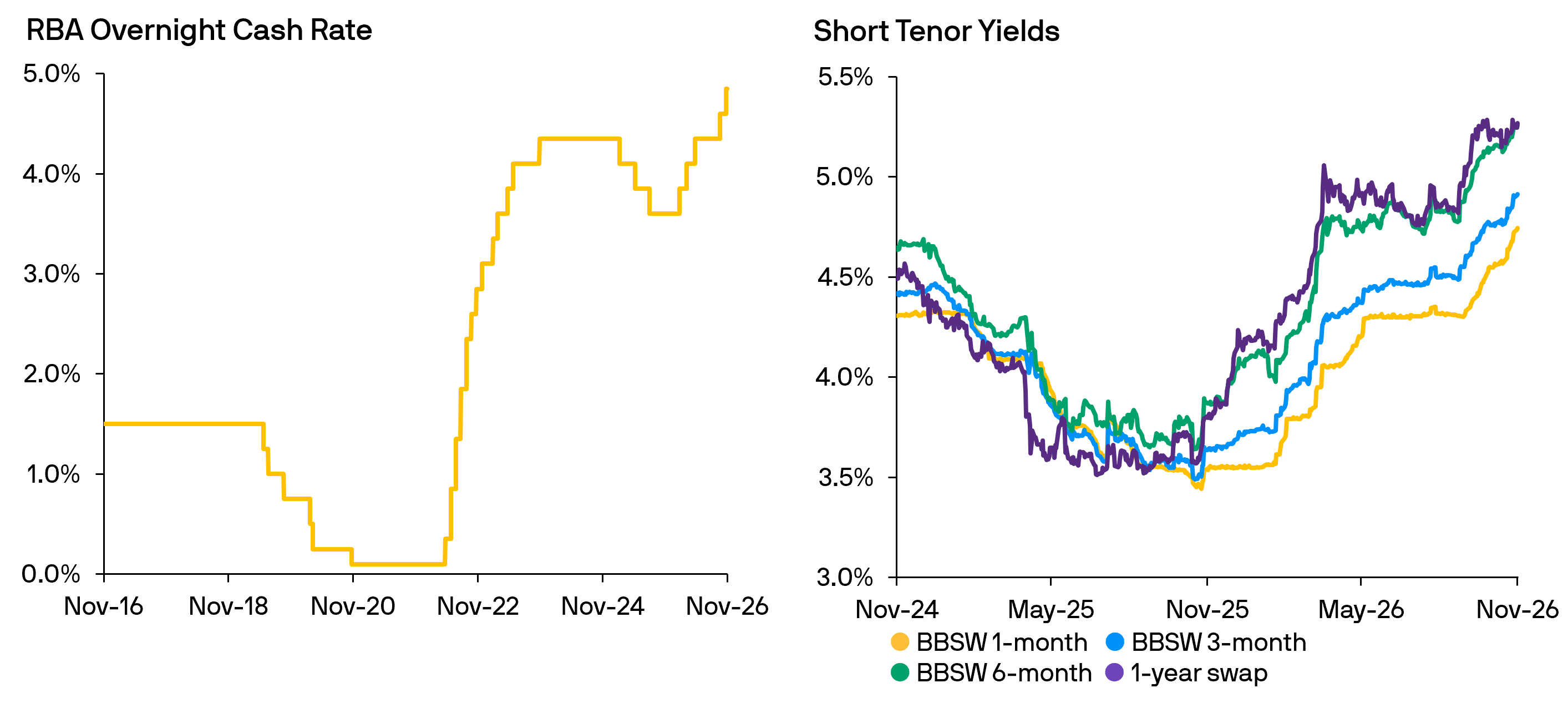
- The RBA raised the cash rate by 25bps to 4.85%, an 18-year high, as it sought to prevent persistent inflation becoming embedded.
- Inflation is expected to remain above 3% over the coming year, while higher rates should slow demand and lift unemployment despite resilient employment and business investment.
- For cash investors, higher rates boost current income and present opportunities to extend duration. Amid continued uncertainty, a cautious and diversified approach to investing remains important.
A hawkish, but unconvincing hike
At its 3rd November monetary policy meeting, the Reserve Bank of Australia (RBA) raised the cash rate by 25 basis points to 4.85%, an 18-year high. The statement was hawkish, citing a materially higher inflation outlook, persistent upside risks, and the danger of inflation expectations becoming entrenched. Recent data confirmed that underlying inflation remained broad-based with domestic capacity pressures were tighter than previously assessed. Higher fuel costs were feeding through to other prices.
The decision was not unanimous: six members voted to raise the cash rate, while three preferred to leave it unchanged. Governor Bullock struck a more balanced tone at the subsequent press conference. She emphasized that the RBA was not seeking to push the economy into recession and the tighter policy was helping to slow inflation. The full effects of the latest rate increases had yet to fully taken effect. Overall, the meeting signaled a hawkish policy stance, but left room for a pause, leaving rates higher for longer.
Fig 1: RBA has hiked rates for the fifth time in 2026 to 4.85%; BBSW yields moved higher in anticipation of the rate hike.
Source: RBA, Bloomberg and J.P. Morgan Asset Management; data as of 3 November 2026
Price Pressures Rise, Growth Momentum Fades
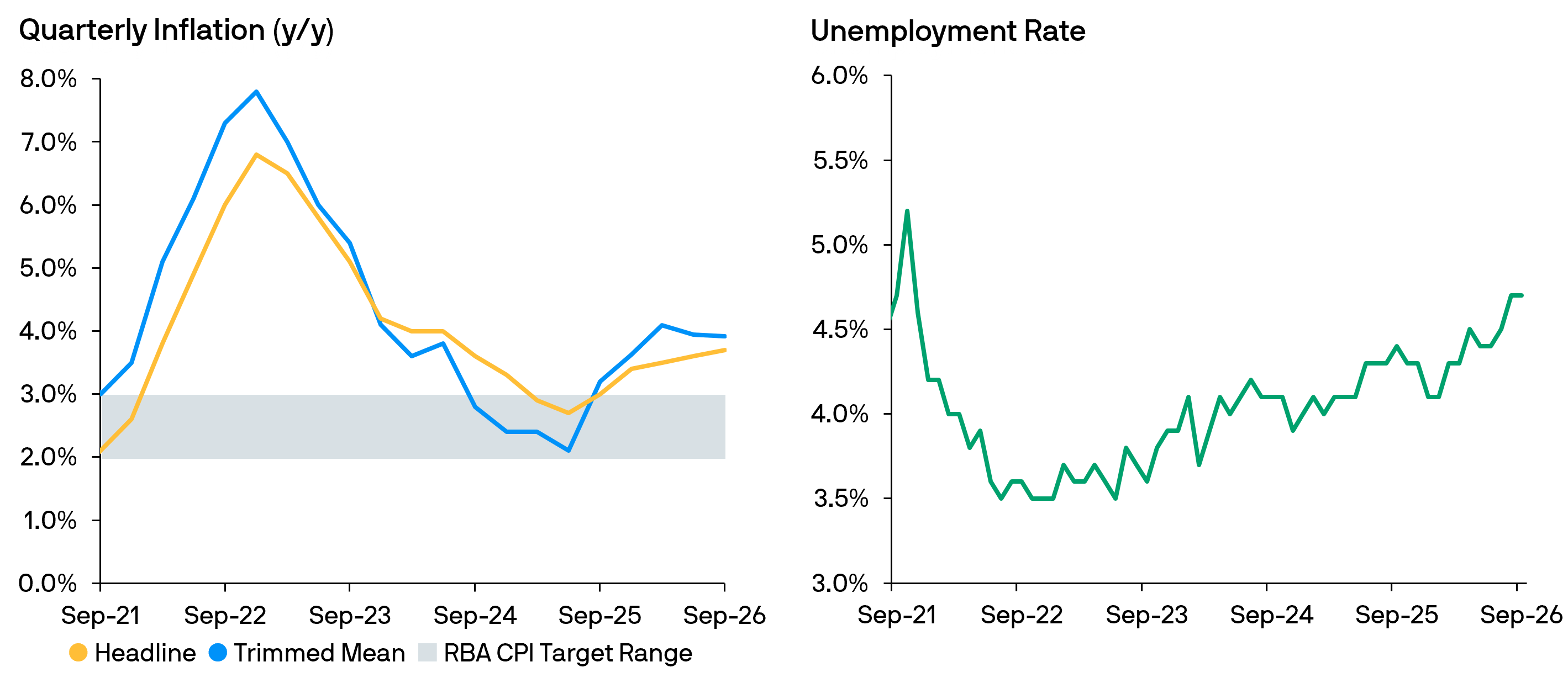
Inflation pressures have broadened. The RBA cited higher fuel and commodity prices linked to the Middle East conflict, tighter domestic capacity pressures, and AI-related investment pushing up technology-related goods prices. Inflation is now expected to remain above target for the coming year and not decline to the top of the 2–3% target range until late 2027, around three quarters later than previously expected. The Board warned that this outlook could entrench higher inflation expectations. Governor Bullock confirmed the Bank was uncomfortable with this risk, prompting the rate increased.
The RBA noted the economy is slowing. Higher interest rates and falling housing prices are expected to weigh on household consumption and dwelling investment. Unemployment rate is forecast to rise further than projected in August, reaching 5.1% by the end of 2028, up from 4.7% in September. However, Governor Bullock noted that unemployment remained relatively low and employment was still growing. The RBA continued to assess the labour market as “a little tight.” In contrast, business investment, including data centre-related spending, is robust and expected to provide near-term support. Growth among Australia’s major trading partners has been stronger than expected, although uncertainty around the domestic and global outlook remains elevated.
Fig 2: Inflation has proved persistent, despite unemployment climbing to a five-year high of 4.7%.
Source: Bloomberg and J.P. Morgan Asset Management; data as of 3 November 2026
Restrictive Rates, with a Pause in Sight
On balance, the statement was hawkish: with the Board judging that further tightening in financial conditions was warranted and reiterating its commitment to returning inflation sustainably to target. The RBA did not commit to further rate increases, saying it would be guided by incoming data. Governor Bullock’s comments also highlighted the balancing act facing the Bank, as it attempts to reduce inflation while avoiding an unnecessary recession and supporting full employment. The three members who preferred to hold rates, she explained, placed slightly greater weight on downside growth risks and wanted to see more data.
The split vote and Governor Bullock’s balanced press-conference remarks gave the meeting a more nuanced and somewhat dovish tone. Yields edged lower and the Australian dollar weakened after the meeting, as markets interpreted the signals as suggesting this hike could be the last for now. The base case is an extended pause rather than an imminent pivot, as the RBA assesses whether its five rate hikes are cooling demand and easing capacity pressures. Broadening inflation risks leave the door open to further tightening. A move to rate cuts looks distant: inflation is forecast to remain elevated through end-2027. This makes RBA unlikely to ease until it can credibly judge that inflation is returning sustainably to the 2–3% target range.