


Week in review
- Global manufacturing flash PMI surged to 57.0 in Sep, up 3.1 points
- People’s Bank of China kept 1Y loan prime rate at 3.0%
- Australia unemployment rate rose to 4.6% in August
Week ahead
- U.S. labour market reports
- Japan Tankan survey
- Reserve Bank of Australia interest rate decision
Thought of the week
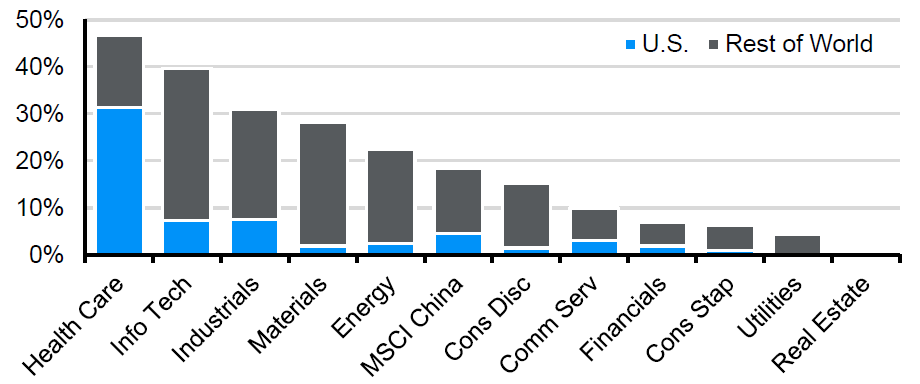
Trade was among the most anticipated topics at the Trump-Xi summit, and last week’s extension of the trade truce to January offers an encouraging sign that both sides remain focused on managing tensions. For Chinese equities, incremental progress should be relatively more supportive to export-oriented sectors, particularly industrials, technology and health care, where U.S. revenue exposure is higher and greater policy visibility could support earnings expectations. That said, trade tensions remain elevated globally as other economies continue to introduce barriers against Chinese imports, with recent measures including tariff hikes on EVs and duties on a range of industrial materials across Europe, Latin America and Southeast Asia. The EU has also set an October deadline on rebalancing the Europe-China trade relations, suggesting that the external environment will remain complex. As such, while export-oriented sectors could benefit from further incremental progress on trade, domestic-facing companies continue to screen as an important cushion against elevated trade volatility.
Overseas revenue exposure across Chinese equity sectors
Share of aggregate revenue, MSCI China constituent by GICS sectors
Source: FactSet, MSCI, J.P. Morgan Asset Management. Data reflect most recently available as of 25/09/2026.
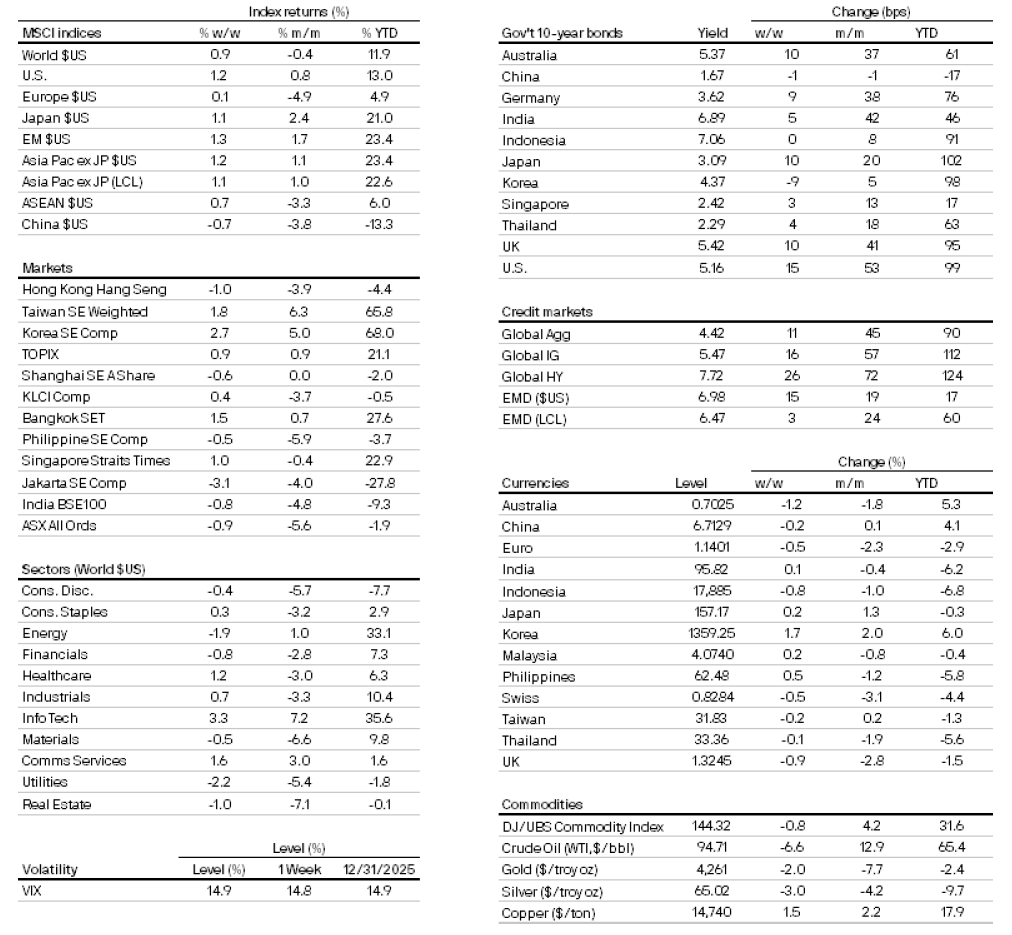
Market data
300a4900-f9d9-11e8-839f-fe2ee17e7f12
All returns in local currency unless stated otherwise.
Currencies’ return are based on foreign currencies per U.S. dollar. An appreciation of the foreign currency against the U.S. dollar would be positive and a depreciation of the foreign currency against the U.S. dollar would be negative.