
A temporary pause in economic strength
We called our 2026 Investment Outlook Fuel in the engine, capturing our expectation that the combination of monetary and fiscal fuel would power a broadening in economic activity by sector and geography. We expected 2026 to be a good year for global growth, and in the early months all was looking good.
Short-term damage to one of the main growth drivers
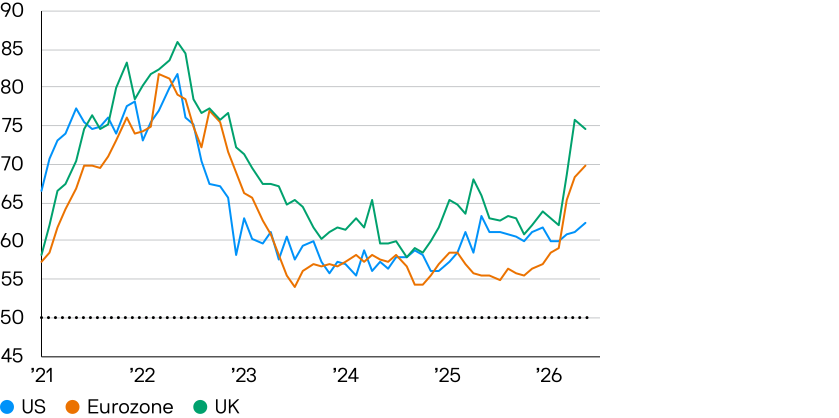
The conflict in the Middle East has dented the ‘all engines’ nature of our growth outlook, particularly for consumer spending. Higher energy prices are in the process of pushing up headline inflation and will likely feed into a broader range of prices, such as food, as the year progresses (see Exhibit 1).
This situation is not like the cost shock of 2022, however. Back then, the world economy was only just re-opening after a global pandemic, with booming demand and a buoyant labour market. Inflation thus took off and required considerable interest rate hikes to get it back under control.
This time around the labour market is much weaker (see Exhibit 2). While some are already pointing to the impact of artificial intelligence (AI), the data isn’t conclusive. In the US, government cutbacks have played a significant role. And in Europe, labour market weakness represents corporate caution in a world where demand is only just recovering, although in the UK the rising minimum wage and employers’ national insurance contributions seem to have had a bigger effect.
Exhibit 1: The Middle East conflict is pressuring input costs…
Composite PMIs: Input prices
Index level
Explore the Investment Outlook
Enough fuel in the engine
Market Insights Team