Q2 2026
Following a strong start to the year for many areas of global equity markets, the outbreak of war in the Middle East poses new threats to a previously bullish outlook. The implications for growth and inflation remain heavily dependent on the size and duration of the shock to energy prices. In aggregate equity markets have so far digested the news in an orderly fashion, although dispersion has picked up significantly beneath the index level. While the outlook for corporate earnings remains solid at this stage, a nimble approach will likely be necessary to navigate volatile markets ahead.
The evolution of the war in the Middle East will have an important bearing on near-term returns, but despite this uncertainty, we continue to believe that global equity markets offer ample opportunities for investors. Valuations have adjusted lower since the start of 2026, and high levels of dispersion should offer an attractive opportunity set for active managers. A shift up the quality spectrum is worthy of consideration for investors looking to boost resilience, while a renewed focus on energy security is one of many examples where fiscal stimulus is strengthening the demand outlook for specific sectors.
-
Equity valuations remain elevated, but have pulled back from recent highs
-
Sector weights will be critical to regional performance
-
Equity market concentration strengthens the case for an active approach
-
An up-in-quality tilt could help to add ballast
-
Domestic stimulus focused on defence and the energy transition will create opportunities
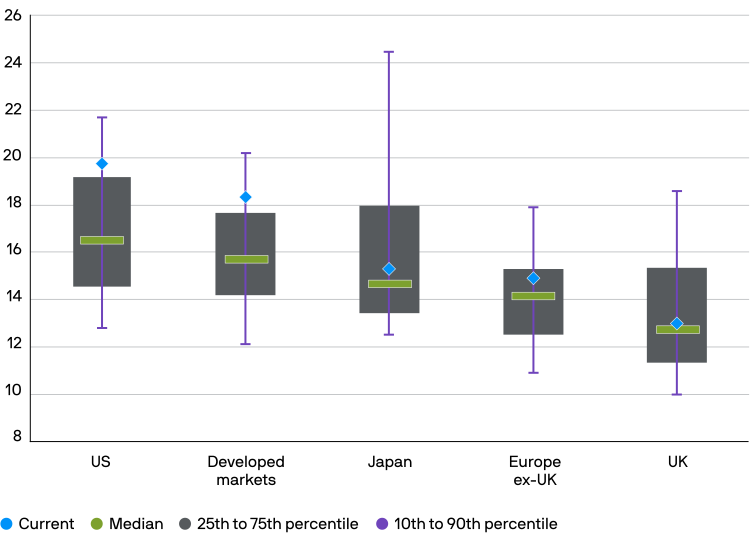
Investor caution about the impact of an energy shock caused valuations in all major equity regions to decline over the first quarter. In the US, the S&P 500 began 2026 trading on a multiple of 22x 12-month forward earnings, and closed the first quarter with multiples below 20x. Notably, this move was driven by a substantial de-rating from the largest 10 stocks, with the gap between the largest 10 stocks and the rest of the S&P 500 now at its smallest since February 2019. Valuations remain lower in other regions, not only driven by sector composition but also sizeable discounts on a sector-by-sector basis relative to US counterparts.
12-month forward P/E ratios
x, multiple, percentiles and median since 2000
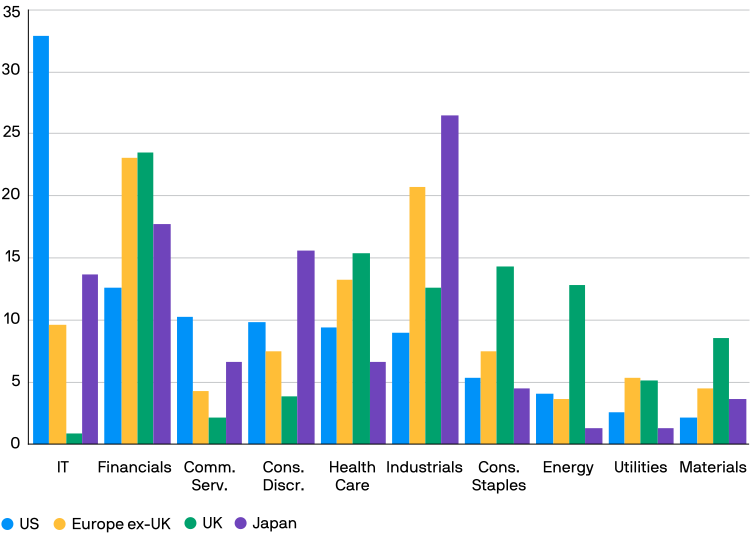
Sector weights will have a strong bearing on how different regions respond to this energy shock. If energy prices continue to rise, markets with the largest weights to the energy sector, such as the UK, are likely to outperform. Since the beginning of the conflict, the 2026 earnings estimates of the FTSE 100 have been revised up 4%, twice as much as those of the S&P 500. Conversely, if markets look to price in de- escalation and energy prices fall, energy intensive sectors, such as industrials, are likely to be the key winners. This would leave regions like Europe ex-UK and Japan, where industrials are one of the largest sectors, relatively well positioned. Investors should therefore pay attention to the differences in sector composition across regions when considering their country allocations.
Global equity sector weights
% of total market cap
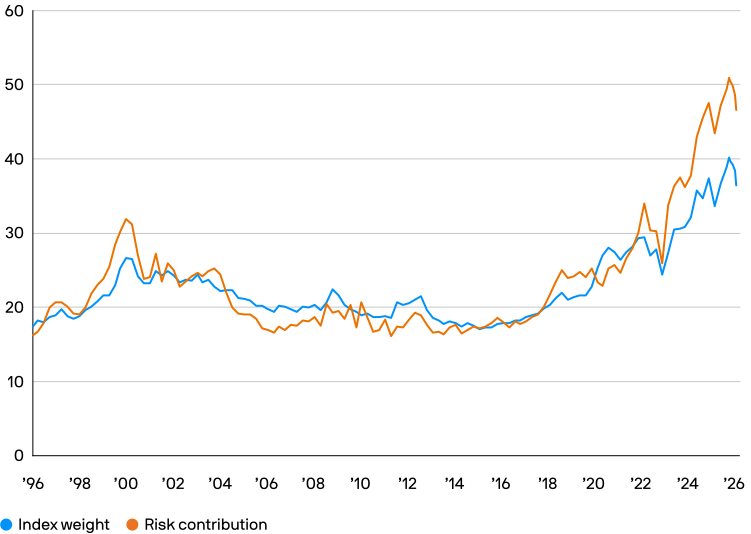
The incredibly strong performance of a handful of AI-related stocks has driven the weight of the largest 10 stocks in the S&P 500 to new highs over recent years. During the dotcom bubble in the early 2000s, the weight of the largest 10 stocks at the time peaked at 27%. More recently, the weight of the biggest 10 stocks hit an incredible 40%. Even more telling, however, is the contribution to risk that these companies are making, with just 10 stocks driving more than 50% of the moves in the index in recent months. High levels of dispersion, both within the largest 10 stocks and across the rest of the index, suggest ample opportunities for stock pickers to identify underloved companies.
Index weight and risk contribution of the top 10 stocks in the S&P 500
%
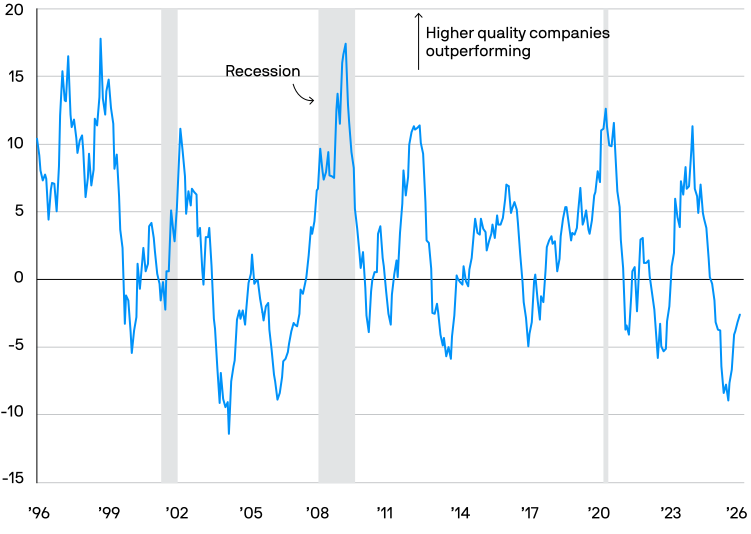
“Quality” can mean different things to different investors, but typically references metrics such as the stability of earnings growth, pricing power and the strength of corporate balance sheets. These characteristics have been overlooked in recent quarters, with lower-quality companies outperforming their higher-quality peers. For investors looking to add ballast to equity allocations, a higher-quality tilt appears worthy of consideration. Crucially, such drawdowns tend to be short lived, as the chart shows, and quality tends to come back into favour most strongly when the economic outlook deteriorates.
MSCI World Quality relative performance
%, rolling one-year total return vs. MSCI World
Past performance is not a reliable indicator of current and future results.
Source: LSEG Datastream, MSCI, J.P. Morgan Asset Management. Periods of recession are defined using US National Bureau of Economic Research (NBER) business cycle dates. Guide to the Markets - EMEA. Data as of 31 December 2025.
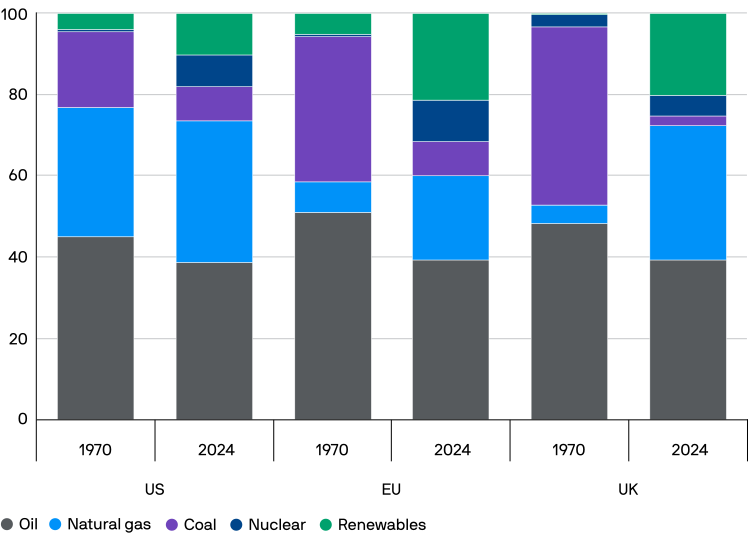
While the near-term outlook remains highly uncertain, the pressure on governments to boost spending on defence and the energy transition is only growing. Independent sources of energy supply are increasingly seen as a key part of national security. The energy mix has changed substantially over recent decades, with the use of renewables and natural gas increasing at the expense of oil and coal. Yet for Europe in particular, a step change in the pace of progress is likely necessary if it is to materially reduce its dependency on energy imports. This should create opportunities in companies that can demonstrate their goods and services are well aligned with national incentives.
Historical energy mix comparison
% of primary energy consumption, 1970 vs. 2024