
Introduction to ETFs
What is an ETF?
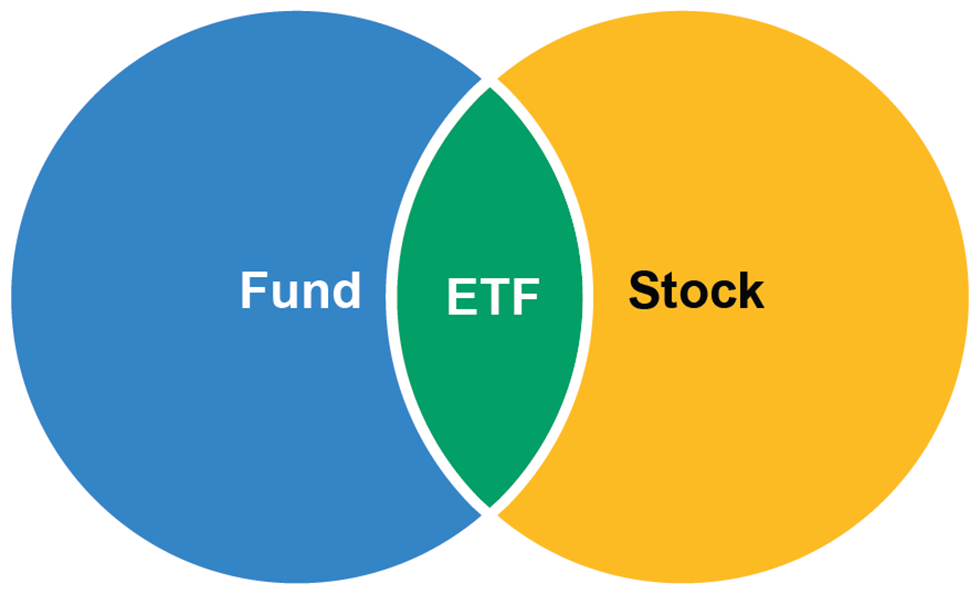
An Exchange-Traded Fund (ETF) is an investment wrapper which combines the benefits of a fund and a stock.
A fund offers:
- Diversified exposure
- Economies of scale
- Professional management
A stock offers:
- Liquidity
- Transparency
- Trading flexibility
How does an ETF work?
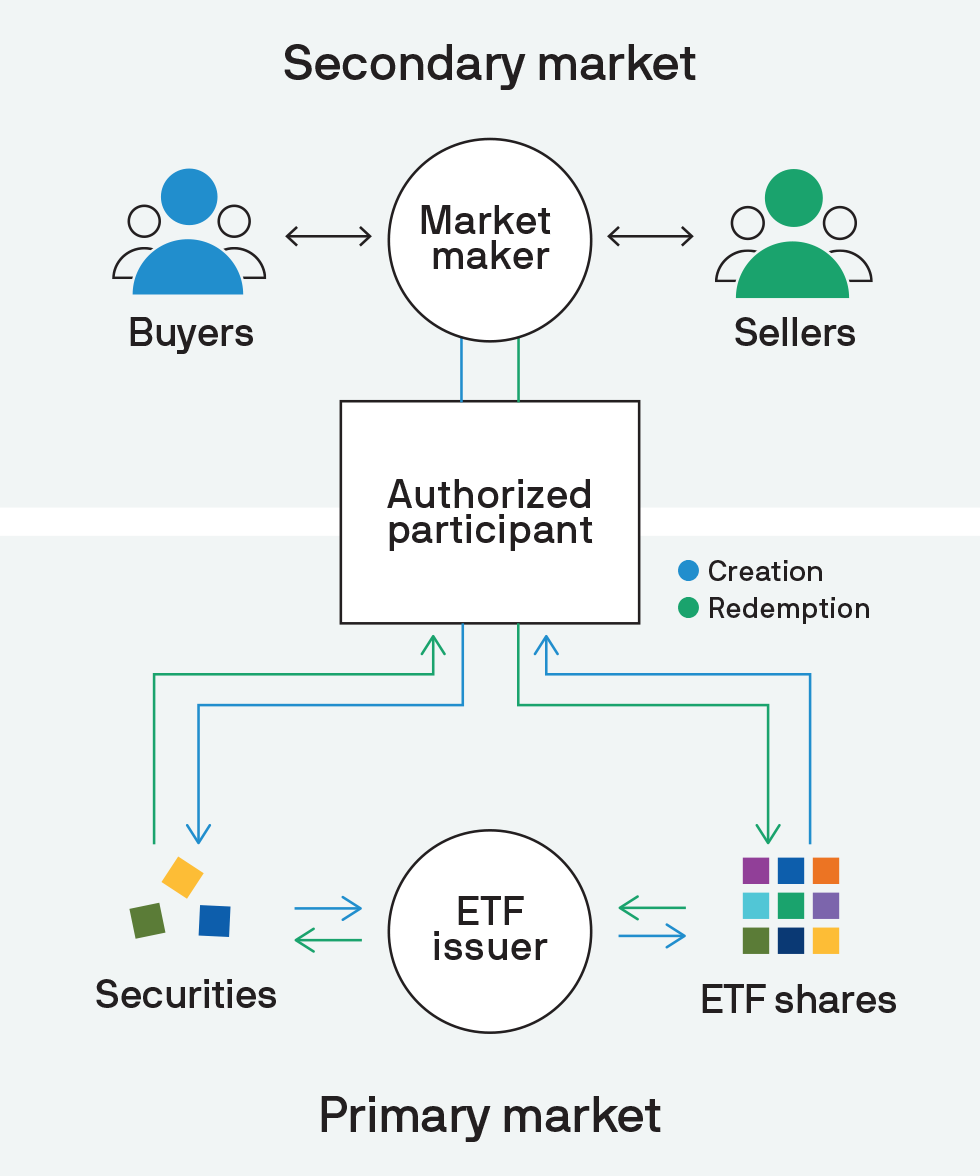
The structure of the ETF wrapper provides greater opportunity for improved economics:
- In-kind creations/redemptions, where securities are exchanged for ETF shares, contribute to the cost-effectiveness of ETFs.
- Market-makers help mitigate outsized premiums/discounts of the ETF market-price to the ETF net asset value.
What is an ETF BDR?
Brazilian Depositary Receipts (BDRs) are securities issued in Brazil that are backed by shares of ETFs issued abroad. It is a local investment instrument with underlying exposure to assets held overseas.
- Why invest in ETF BDRs? Like investment funds, ETF BDRs allow investors to access a broad range of assets, such as fixed income and equities. They are traded on the stock exchange like a share, giving investors access to markets throughout the trading day.
- Why are ETF BDRs growing so fast? ETF BDRs offer cost-efficient structures, can be traded easily, and provide access to virtually any market in the world.
- How do investors use ETF BDRs? ETF BDRs can play different roles in investment portfolios, such as tracking equity and fixed income indices (“building blocks”), maximizing diversification by accessing specific regions and sectors, reducing costs, and improving portfolio efficiency thanks to their ease of trading.
Source: J.P. Morgan Asset Management. This website is a general communication for informational purposes only, with educational nature and not intended to serve as a recommendation for investment products or strategies. Before making any financial or investment decision, the investor should seek individual advice from a financial, legal, tax or other professional advisor who considers specific and particular issues of that investor. When applying their funds, it is recommended that investors carefully read the legal documents of the products available on the website www.b3.com.br, the official source for disclosing information on the BDRs of ETFs, with special attention to the sections relating to the purpose and investment policy, as well as risk factors, fees, expenses and charges. Investing in ETF BDRs involves risks, including risks related to detachment from the benchmark index and related to the liquidity of receipts in the secondary market. Investments made in ETF BDRs are not guaranteed by (i) the administrator and manager of the underlying fund, the depositary institution or their respective affiliates, (ii) authorized agents, (iii) any insurance mechanism; (iv) from the credit guarantee fund – FGC, or even, (v) from any person or entity. Past performance does not represent a guarantee of future profitability. Investments made in BDRs of ETFs present risks for the investor. There is no guarantee of complete elimination of the possibility of losses for the BDRs of ETFs, their underlying funds and, consequently, for the investor. The CVM, other international regulators and ANBIMA do not guarantee the veracity of the information provided, nor do they make judgments about the quality of ETF BDRs, the underlying funds, their administrator, manager, depositary institution, authorized agents and other providers of service or deposit receipts to be distributed. J.P. Morgan Asset Management in Brazil does not sell or distribute investment products. For information on investing or disinvesting in BDRs of ETFs, the investor must directly contact the depository institution or the brokerage with which he has an account. J.P. Morgan Asset Management is the brand of the asset management division of JPMorgan Chase & Co. and affiliates worldwide.
What are active ETFs?
When looking at active ETFs, it is first important to note that terms such as “ETF”, “passive” and “index” are not synonymous. ETF simply means Exchange-Traded Fund, which means an ETF is traded at an exchange regardless of the investment strategy used.
Why invest in active ETFs?
Getting started
Why J.P. Morgan Asset Management?
At J.P. Morgan Asset Management, our active ETFs reflect, in real time, the investment views of a robust global team.
1 J.P. Morgan Asset Management, as of December 31, 2025.