

Who we are
Dedicated private credit professionals with extensive experience and specialized expertise.
Source: J.P. Morgan Asset Management; as of September 30, 2024.
Our strategic framework
Diversifying portfolios and capturing opportunities across the credit spectrum
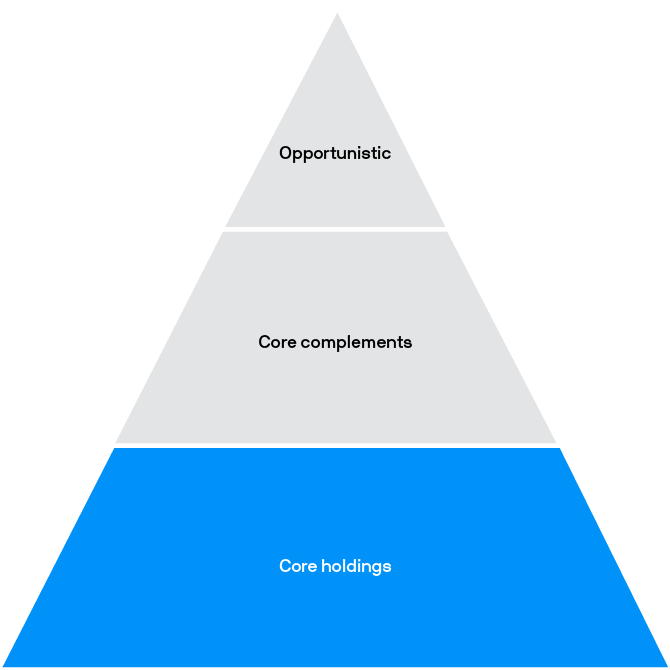
Seek to generate stable, consistent income from high-quality assets with low volatility
Characteristics:
- Low volatility
- Capital preservation
- High income
Examples:
- Senior direct lending
- Senior commercial real estate lending
- Senior real asset lending
- Senior residential real estate lending
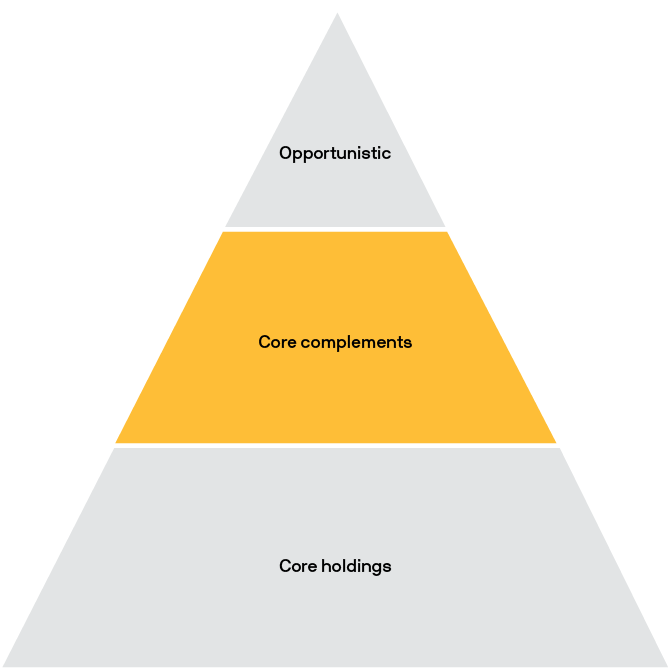
Seek to increase total returns and portfolio diversification
Characteristics:
- Asset class diversification
- Moderate return enhancement potential
- Downside protection
Examples:
- Direct lending mezzanine
- Commercial real estate mezzanine
- Private credit secondaries
- Multisector
- Real asset mezzanine
- Levered lending
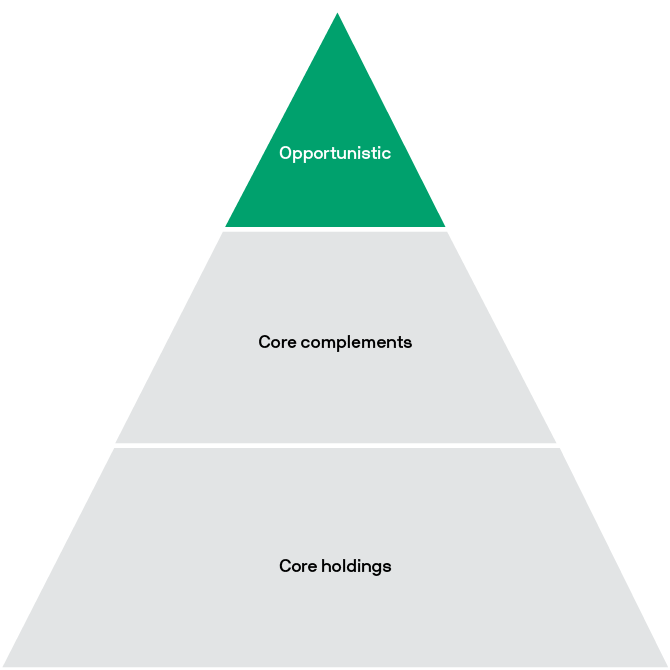
Seek to generate high total returns focusing on distressed, niche or opportunistic lending
Characteristics:
- Specialized markets
- High total return potential
- Risk mitigation
Examples:
- Specialty finance
- Esoteric credit
- Distressed lending
- Special situations
- Market inefficiencies
Our capabilities
Broad array of private credit solutions for clients seeking diversification, income, return and/or capital preservation.
Insights
Drawing on the experience of more than 380 dedicated alternatives professionals, access our latest insights in private credit and beyond.*
Gaining perspective on public and private equity
Read the latest publication from our Strategic Investment Advisory Group, exploring strategic asset allocation and active portfolio management in today’s credit markets.

*Source: J.P. Morgan Asset Management; as of December 31, 2024.
For more information, please email us or contact your J.P. Morgan client advisor.
Private Credit
Private Credit: Private credit securities may be illiquid, present significant risks, and may be sold or redeemed at more or less than the original amount invested. There may be a heightened risk that private credit issuers and counterparties will not make payments on securities, repurchase agreements or other investments held by the strategy. Such defaults could result in losses to the strategy. In addition, the credit quality of securities held by the strategy may be lowered if an issuer’s financial condition changes. Lower credit quality may lead to greater volatility in the price of a security and in shares of the strategy. Lower credit quality also may affect liquidity and make it difficult for the strategy to sell the security. Private credit securities may be rated in the lowest investment grade category or not rated. Such securities are considered to have speculative characteristics similar to high yield securities, and issuers of such securities are more vulnerable to changes in economic conditions than issuers of higher-grade securities.