


Head of International Liquidity Fund Management

In Brief
- RBA raised the cash rate by 25bps to 4.35% for a third consecutive meeting in May, reaffirming its commitment to price stability.
- Inflation remains elevated due to capacity pressures and higher fuel prices from the Middle East conflict. The RBA warns that inflation could stay higher for longer.
- The RBA’s hawkish stance is set to persist. AUD cash investors could benefit from higher yield opportunities but should remain disciplined amid uncertainty.
Decisive Action
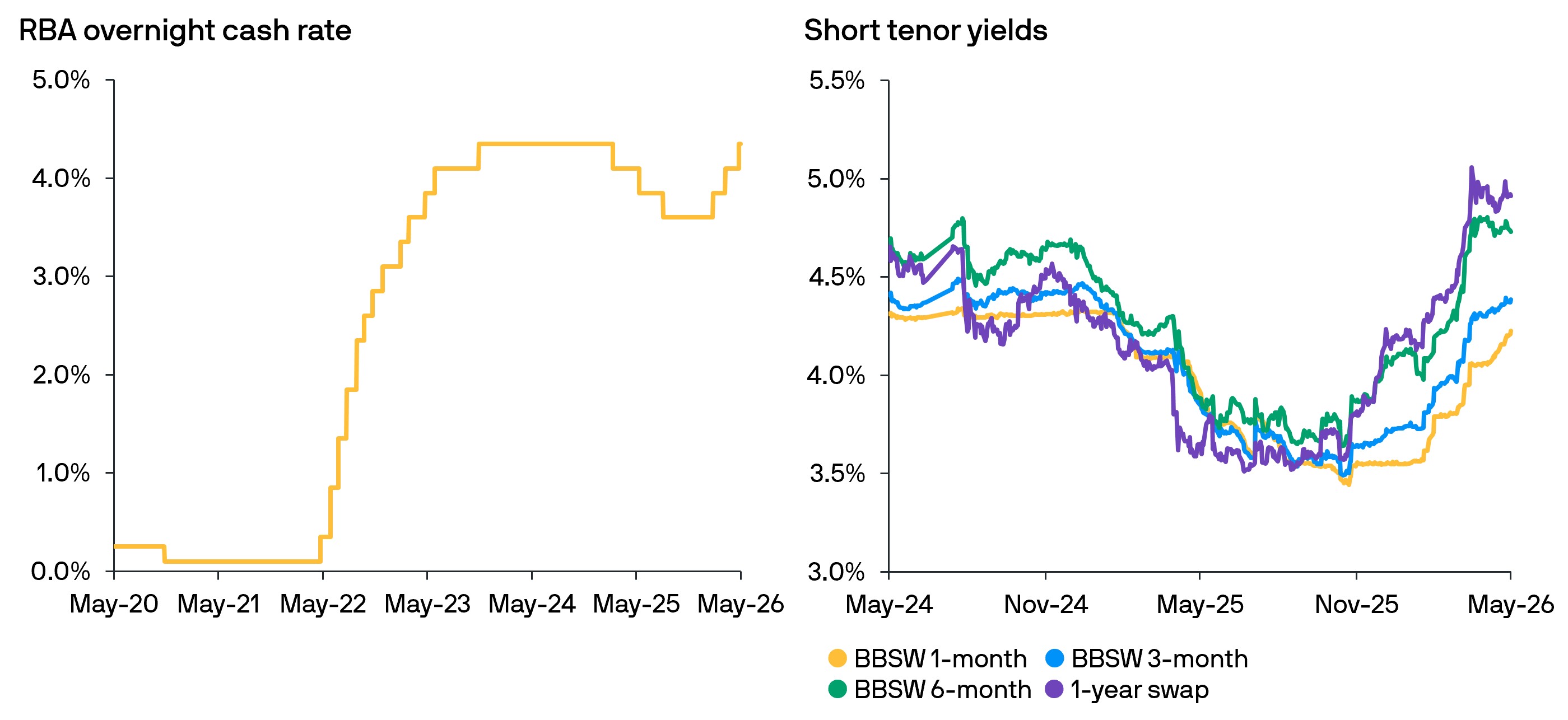
At its May meeting, the Reserve Bank of Australia (RBA) raised the overnight cash rate by 25bps to 4.35%. This marked the third consecutive hike as inflation pressures intensified. The board’s 8-1 majority decision signals its commitment to price stability amid elevated global and domestic risks.
The accompanying rationale was clear: inflation picked up materially in the second half of 2025, primarily due to greater capacity pressures in the economy. The ongoing conflict in the Middle East has sharply elevated fuel and commodity prices, “which are already adding to inflation”. The RBA also noted early signs of firms passing on cost increases to consumers, alongside a rise in short-term inflation expectations. These factors necessitated decisive action to maintain price stability. After three rate hikes, the bank believes its monetary policy is now well placed to respond to future developments.
Fig 1: The RBA’s streak of three rate hikes has returned yield to their previous cycle high
Source: RBA, Bloomberg, J.P. Morgan Asset Management; data as of 5 May 2026.
Plausible Scenarios
The RBA has updated its forecasts to reflect recent geopolitical developments. Its baseline scenario assumes an early resolution to the Middle East conflict and a subsequent decline in fuel prices. Even so, inflation is expected to peak higher than previously anticipated before gradually easing.
If the conflict drags on or worsens, the RBA warns of “plausible scenarios where inflation is higher and activity lower than envisaged”, both in Australia and its major trading partners. Higher energy prices could become embedded in longer-term inflation expectations. The Board is monitoring closely for second-round effects as firms raise prices more broadly. This inflation impulse adds to the high inflation recorded at the start of the year. The central bank acknowledges that these pressures are likely not just a temporary blip but a sustained challenge reflecting persistent capacity constraints.
Financial conditions have tightened since the start of the year. Money market rates, government bond yields, and the AUD have all risen. Credit remains accessible, but the RBA notes materially heightened uncertainties around economic activity and inflation.
Risks Tilted to the Upside
Three rapid rate hikes underscore the central bank’s concern that elevated inflation could become entrenched. The ongoing Middle East conflict further increases upside risks.
With the cash rate now at the previous cycle high, the central bank considers monetary policy well positioned to address future shocks. Markets still anticipate additional rate hikes, but the frequency and scale are now less certain as base rates return to restrictive levels. Worries about second-round effects and longer-term inflation expectations suggest the RBA’s hawkish stance will remain until inflation shows clear signs of returning to target.
For AUD cash investors, the rate hike and steeper yield curve are welcome developments. They present opportunities of higher current income and to tactically extend duration and lock in relatively attractive yields. Maintaining a disciplined and diversified investment approach remains essential amid heightened geopolitical uncertainty.