


Head of International Liquidity Fund Management

In Brief
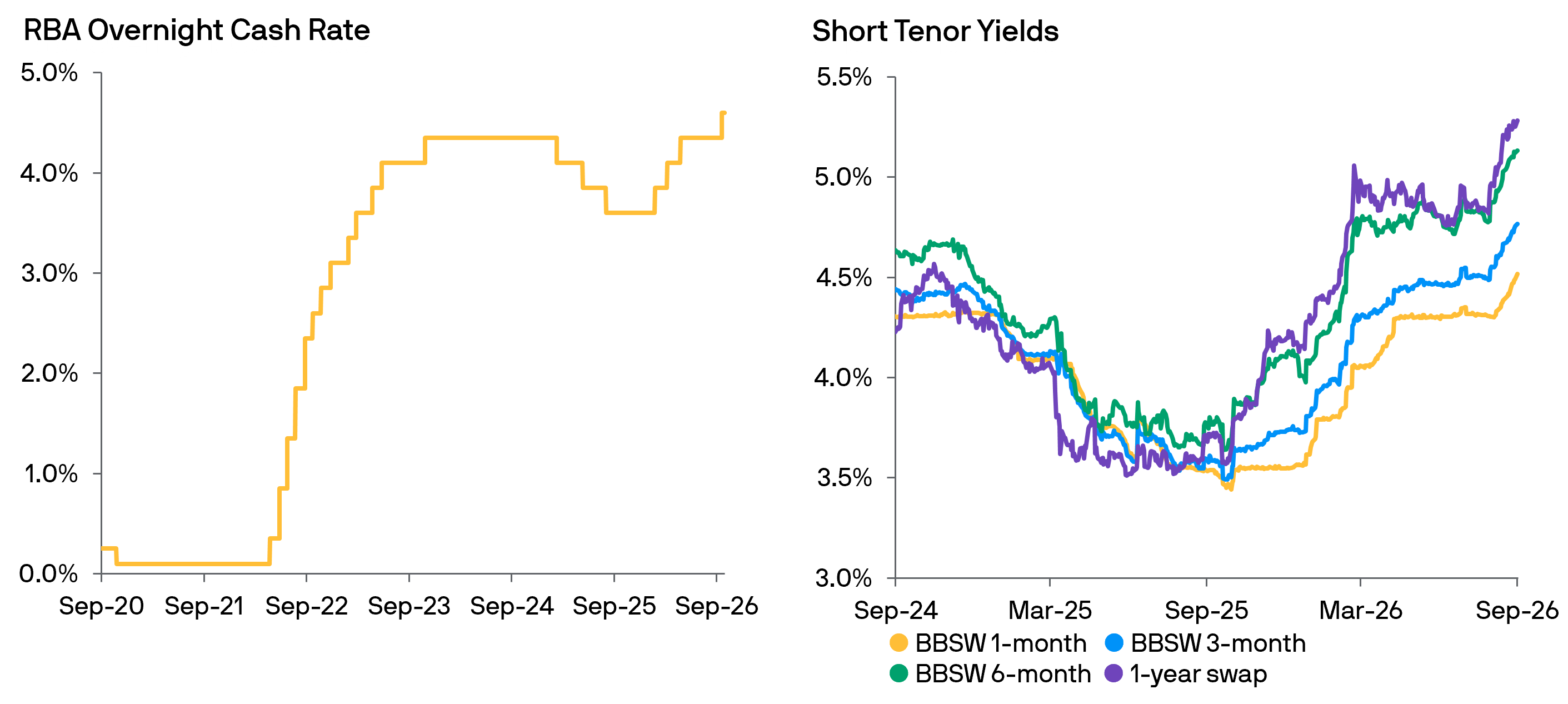
- At its monetary policy meeting, the RBA hiked the overnight cash rate by 25bps to 4.60%. This was the fourth hike in the current cycle, taking rates to a 15-year high.
- The bank’s justification was clear, noting that inflation remains elevated and previously cited upside risks to inflation were now materializing.
- For AUD cash investors, higher interest rates are likely to support higher current income and present potential opportunities to tactically extend duration; but discipline and diversification remain important.
From pause to hike
At its September monetary policy meeting, the Reserve Bank of Australia (RBA) resumed its rate hiking cycle - raising the cash rate target by 25bp to 4.60% (Fig 1). The Board’s rationale was transparent with inflation remaining “too high” and key upside risks moving from conditional to “materializing”.
This marks a clear pivot from the two previous hawkish holds, when the Board kept rates unchanged as it was “assessing how the economy was evolving” to an unanimous decision that “a further tightening… is warranted to support a return of inflation to target in a reasonable period”.
At the subsequent press conference, RBA Governor Bullock struck a hawkish but cautiously optimistic tone - reaffirming the Bank would do what is needed with rates to lower inflation, while indicating that this year’s tightening may be sufficient to bring inflation back to target. She added that policy is now restrictive, but that the neutral rate in Australia appears to be moving higher.
Fig 1: RBA has hiked to a 15-year high of 4.60%; yields have increased and curves have steepened in anticipation of further hikes
Source: RBA, Bloomberg and J.P. Morgan Asset Management; data as at 29th September 2026.
Persistent Inflation, slowing growth
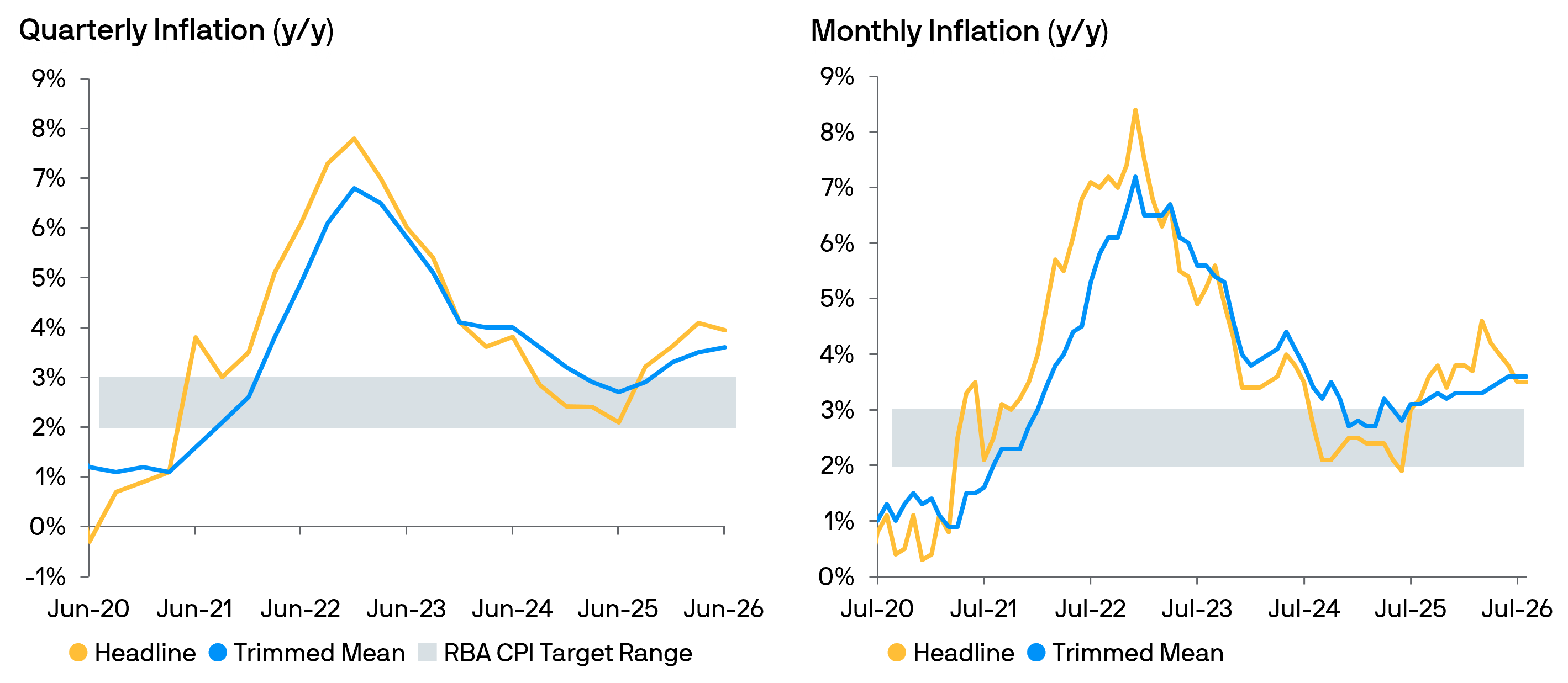
The statement confirmed the RBA is increasingly focused on inflation given its persistence and risks of second-round effects. This is being driven by higher-than-expected energy prices, sustained AI related demand and domestic cost pressures. With these three factors unlikely to abate in the near term, the bank expects inflation to remain elevated.
The economic outlook is more mixed: Growth has slowed, consumer spending is easing, housing prices have fallen and labour market conditions have eased. In contrast, business investment and debt remain strong, while growth in Australia’s main trading partners has been robust as AI investment continues to outweigh the adverse impact of the Middle East conflict. The RBA also emphasizes heightened uncertainty that makes forecasting potential outcomes more challenging.
Fig 2: Quarterly and monthly inflation data readings remain persistently above the RBA target range of 2-3%
Source: Australia Bureau of Statistics, Bloomberg and J.P. Morgan Asset Management; data as at 29th September 2026.
Outlook
The September statement and press conference struck a hawkish but more measured tone. Inflation remains the key policy driver, and the Board continues to view slower growth as necessary to return inflation to target. It reiterated that it will do what it considers necessary to prevent inflation becoming embedded, including raising the cash rate further if required. Governor Bullock, however, expressed hope that the four rate hikes already delivered would be sufficient to bring inflation down sustainably.
Practically, this implies the near-term path is “higher for longer” with an active tightening bias – but still explicitly data dependence. Although with rates now firmly restrictive, if growth continues to cool and housing weakness deepens, the bar for additional hikes will rise.
For Australian cash investors, the rate hike and steeper yield curve are welcome developments, presenting higher current income and opportunities to tactically extend duration and lock in attractive yields. However, a disciplined and diversified investment approach remains essential amid heightened economic uncertainty.