logo
  • Products
    Overview

    Products

    • ETFs
    • Separately Managed Accounts

    Asset Class Capabilities

    • Equity
    • Alternatives
  • Strategies
    Overview

    Strategies

    • J.P. Morgan Private Markets Strategy
    • Alternatives Investing
    • ETF Investing
    • Our Active ETFs
  • Insights
    Overview

    Market Insights

    • Market Insights Overview
    • Guide to the Markets
    • Guide to Alternatives
    • The Canada Economic and Market Update
    • On the Minds of Investors
    • Principles of Alternative Investing

    Portfolio Insights

    • Portfolio Insights Overview
    • Alternatives
    • Asset Class Views
    • Long-Term Capital Market Assumptions
    • Alternative Outlook
    • Multi-Asset Solutions Strategy Report
  • About Us
    Overview
  • Contact Us
  • Language
    • English
    • Français/ French
  • Role
  • Country
Search
Menu
Search
You are about to leave the site Close
J.P. Morgan Asset Management’s website and/or mobile terms, privacy and security policies don't apply to the site or app you're about to visit. Please review its terms, privacy and security policies to see how they apply to you. J.P. Morgan Asset Management isn’t responsible for (and doesn't provide) any products, services or content at this third-party site or app, except for products and services that explicitly carry the J.P. Morgan Asset Management name.
CONTINUE Go Back
  1. Home | Canada Financial Professionals
  2. Strategies
  • Introduction to ETFs
  • What are active ETFs?
  • Getting started
  • Why J.P. Morgan?
  • Insights

Introduction to ETFs

  • What is an ETF?

  • How does an ETF work?

  • What are the different types of ETFs?

  • How do ETFs trade?

What is an ETF?

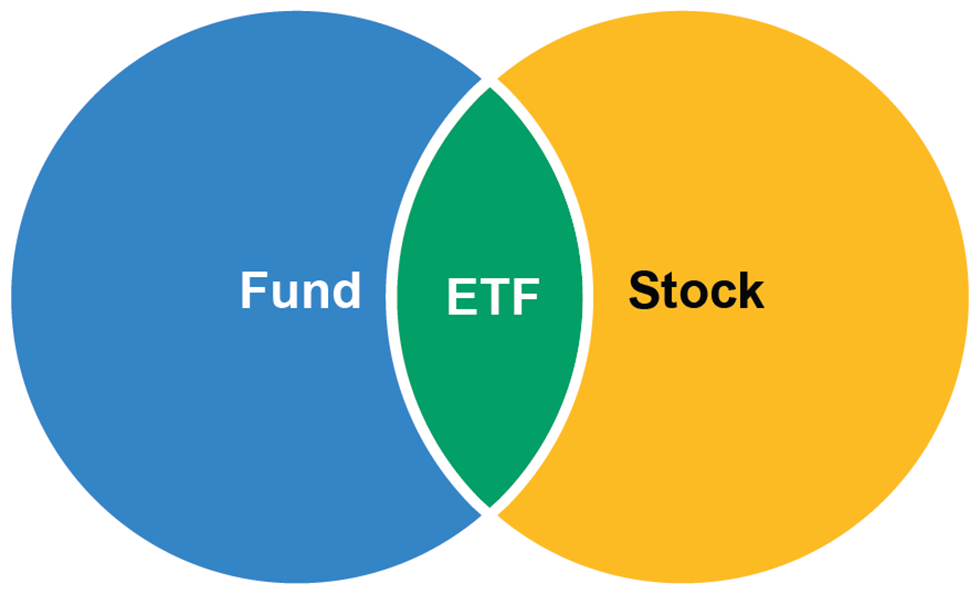
An Exchange-Traded Fund (ETF) is an investment wrapper which combines the benefits of a fund and a stock.

A fund offers:

  • Diversified exposure
  • Economies of scale
  • Professional management

A stock offers:

  • Liquidity
  • Transparency
  • Trading flexibility
stock-etf-bond
Source: J.P. Morgan Asset Management. Shown for illustrative purposes only.

How does an ETF work?

The structure of the ETF wrapper provides greater opportunity for improved economics.

  • In-kind creations/redemptions, where securities are exchanged for ETF shares, contribute to the cost-effectiveness of ETFs
  • Market-makers help mitigate outsized premiums/discounts of the ETF market-price to the ETF net asset value
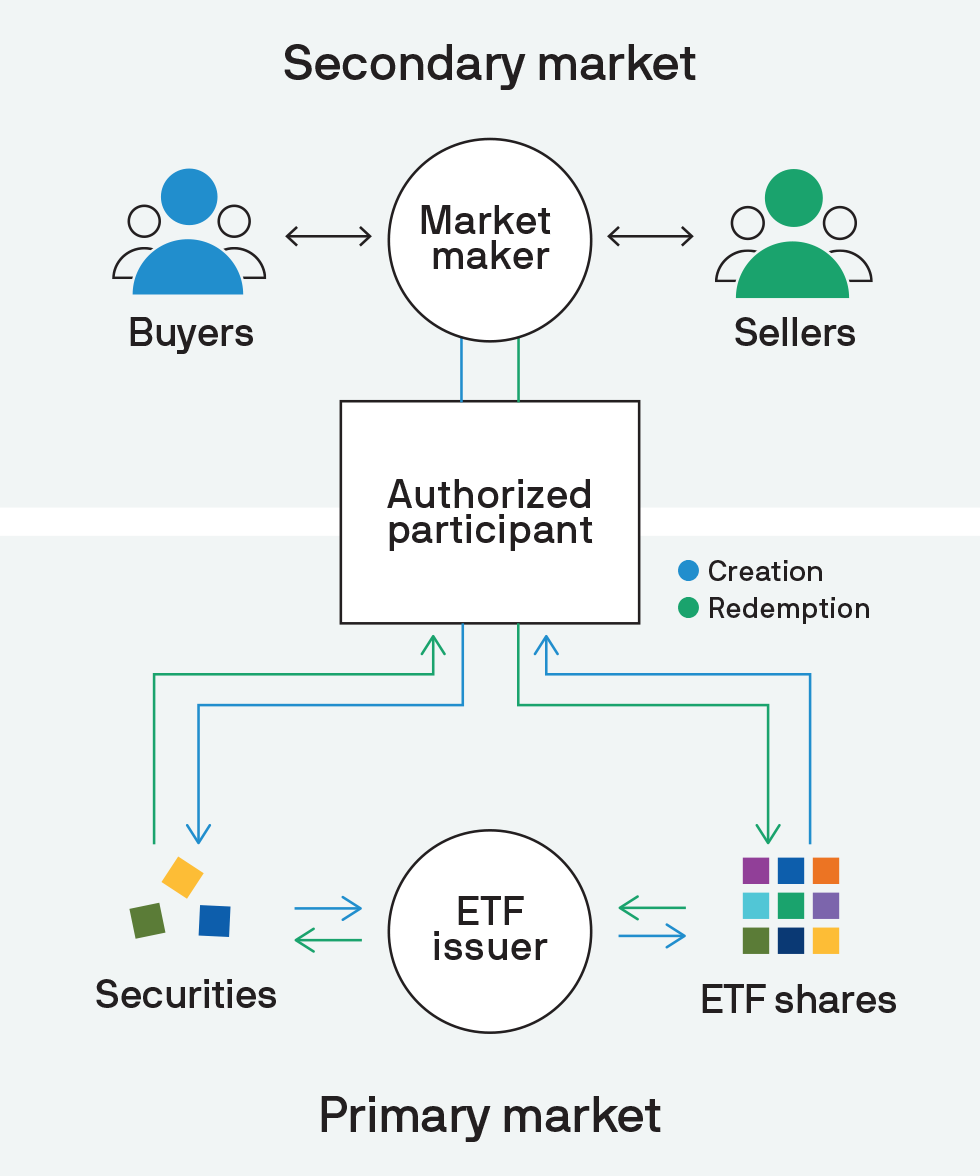
Chart 4-reworked
For Illustrative Use Only. Investors must buy and sell units on a secondary market with the assistance of an intermediary (e.g. a stockbroker) and may incur fees for doing so. In addition, investors may pay more than the current net asset value when buying units and may receive less than the current net asset value when selling them.

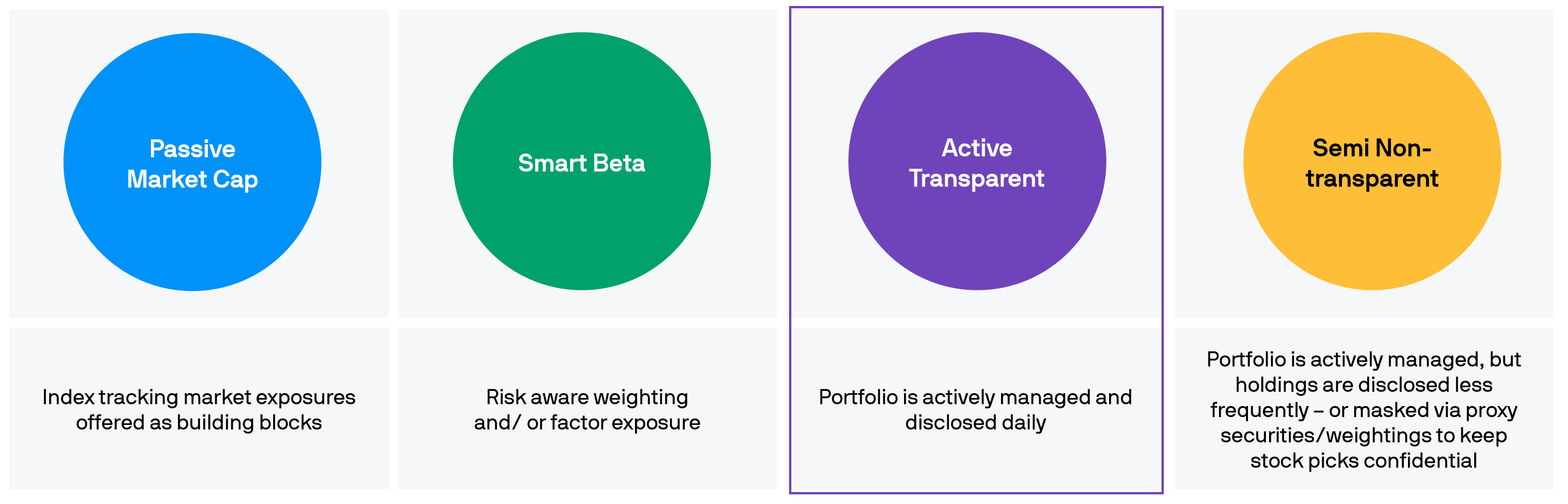
Type of ETFs

different-types-of-etfs
*Source: J.P. Morgan Asset Management. Shown for illustrative purposes only.

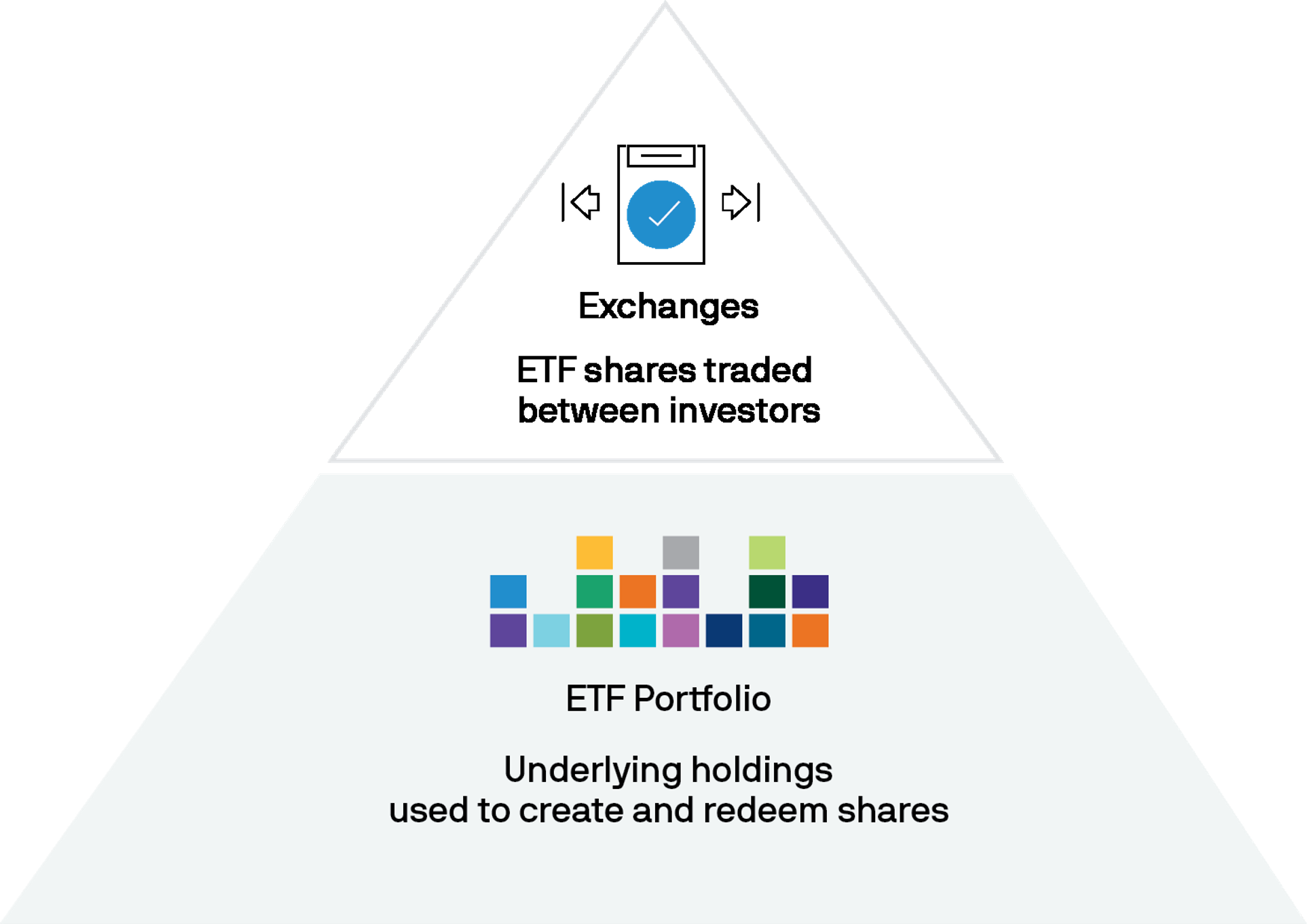
How do ETFs trade:

ETFs offer more liquidity than meets the eye.
how-do-etfs-trade
Sources: 1. Morningstar (54 ETFs), January 3, 2024. 2. Russell 1000 Value Index, January 3, 2024.

What are active ETFs?

When looking at active ETFs, it is first important to note that terms such as “ETF”, “passive” and “index” are not synonymous. ETF simply means Exchange-Traded Fund, which means an ETF is traded at an exchange regardless of the investment strategy used.

A variety of “engines” or strategies can therefore be placed in the ETF structure to leverage its benefits.

“Active” refers to specific investment decisions, which are designed to achieve specific outcomes, such as outperforming an index (Alpha), generating income, or achieving control in terms of duration, yield or credit quality.

An active ETF provides access to these specific outcomes, all while maintaining the attributes of the ETF structure.

The ETF is just a wrapper and the content itself is independent of the vehicle

01-Landing Page infographic - The ETF is just a wrapper and the content itself is independent of the vehicle
Source: J.P. Morgan Asset Management. For illustration purposes only. The ETF aims to replicate the performance of an index however its market price can be different from its net asset value and from the net asset value of the index.

Active ETFs overview

Why invest in active ETFs?

Getting to know an active ETF

Getting started

Useful information to consider when investing in active ETFs

A leader in ETF investing

At J.P. Morgan, we’re combining the built-in benefits of ETFs with our best-in-class research insights, portfolio expertise and trading capabilities.

1 J.P. Morgan Asset Management, as of March 31, 2024.